Why The Good Place’s Good Place Isn’t That Good

I really like The Good Place. It is smart, funny, and poses interesting questions about morality and the human condition. The premise of the show is that Eleanor Shellstrop (Kristen Bell) dies and goes to “the Good Place.” However, she soon finds out that someone made a mistake and she doesn’t belong. She then tries to learn how to be a good person by learning moral philosophy from her soulmate, Chidi (William Jackson Harper). Will she ever be good enough to earn her place in the good place? Are things really what they appear to be? I will skip most of the plot points and focus on the final two episodes. There will be spoilers ahead if you have yet to see this series.

The Problem with the Good Place

When our heroes finally get to the real good place, we see that things aren’t quite what they expected. They quickly learn that because any desire can be met at any moment, they turn into “happiness zombies” who are numb to everything. For example, one man said, “Can I get coke?” (receives it instantly). “No, a water. No, a lamp. No, a cat. No, a spaceship. No, one huge Junior Mint. No, a coke.” Being able to get anything you want whenever you want doesn’t lead to satisfaction. Hypatia of Alexandria (Lisa Kudrow) added, “On paper, this is paradise. All your desires and needs are met. But it is infinite. And when perfection goes on forever, you become this glassy-eyed mush person.”

Another example is from Jason (Manny Jacinto). His ultimate dream was to race monkeys in go-karts, but that got boring quickly. Jason reported, “I mean, monkeys and go-karts was fun for a while. Then I was like, ‘Oh, you know what’d be cool? Hippos and go-karts.’ And I was like, ‘Yo, what about Draculas with jet packs?’ I did, like, fifty combos, and then I just kinda wanted to hang out with you guys again.”

Hypatia responded, “That’s it in a nutshell. ‘Cause you get here and you realize that anything’s possible, so you do everything, and then you’re done. But you still have infinity left. This place kills fun and passion and excitement and love, ’till all you have left are milkshakes.”

The Solution

The apparent problem of the good place is that it goes on for eternity. ” They argue that what makes a vacation special is that it eventually ends. Similarly, they “fix” the afterlife by giving everyone the opportunity to end their existence. They can walk through a magical door and their soul will no longer exist as a single entity, but will be scattered throughout the universe (similar to the Buddhist idea of Nirvana). The only way to make the good place tolerable is to have the option to commit soul suicide.

My Thoughts

The problem with the good place is not that it goes on for eternity, but that there is no God. This show correctly demonstrates that any eternity without a God who can completely satisfy our souls is hell. Ecclesiastes 3:11 tells us that God placed eternity in our hearts. We were created for God. Even if you removed all of the bad things from your life (or afterlife) and had access to any pleasure at any time, you still wouldn’t be satisfied.

But the bible describes a God who is all-satisfying. Jesus said, “Whoever drinks from the water that I will give him will never get thirsty again. In fact, the water I will give him will become a well of water springing up in him for eternal life” (John 4:14). Christians get a taste of this on earth, but it will be fully realized in the new heavens and new earth. “Look, God’s dwelling is with humanity, and he will live with them. They will be his peoples, and God himself will be with them and will be their God. He will wipe away every tear from their eyes. Death will be no more; grief, crying, and pain will be no more, because the former things have passed away” (Revelation 21:3-4).

Jesus offers the life that will never die. Because God is unimaginably great and beautiful, we never have to fear being bored in heaven. There will be a sense of peace, joy, and contentment that we always longed for but could never quite grasp on earth. Our souls will finally be home.

The Case Against “Should”

“Should” is a weird word. We all use it multiple times a day, yet I struggle to define it. According to dictionary.com, “should” is an auxiliary verb meaning “must; ought (used to indicate duty, propriety, or expediency).” It can also be used to express an expectation: “They should be here soon,” or express a correction: “That semicolon should be a comma.”

Outside of giving or asking for advice, I think “should” should be avoided. The way we use that word today is often not helpful, and different vocabulary would serve us better. Here are some problems with “should.” It is non-commital, not actionable, isn’t honest, and it produces a vague feeling of guilt. Let’s explore these more deeply.

It is Non-Commital

How often have acquaintances said, “We should hang out sometime,” and then never hang out? By saying “we should hang out” you get the feeling that you are a caring and friendly person without having to put in any effort to follow through. Imagine a man says to his date, “We should get married.” Ladies, would you consider that a satisfying proposal? I think not.

Instead of saying “should” you could say, “I want to hang out with you, is there a good time when we could get together?” This phrasing takes for granted that the other person would want to get together with you. If you are less sure of the relationship you could ask, “Do you want to hang out?” This is more vulnerable and allows for the possibility of being rejected, but it is more likely to result in hanging out with a friend.

It is not an Action Verb

I often hear people say, “I should do X more.” It could be praying, calling loved ones, going to the gym, etc. However, just because you know that something would be good for you doesn’t mean that you will do it.

What would happen if you substituted “should” with “I need to . . .” “I want to . . .” “I will . . .” or “I get to . . .”?

“Need” indicates necessity. If you aren’t doing what you say you need, is it really necessary to you? “Want” indicates desire. Why wouldn’t you do what you want? “Will” indicates a commitment to action. It is still possible for people to break their commitments, but making a verbal commitment makes it more likely that you will follow through. “Get to” reframes your thinking from an obligation to an opportunity. “I get to pray,” sounds more positive than “I should pray.”

It is not Honest

Often when people say things like, “I should go to the gym,” what they are really saying is, “I know going to the gym would be good for me, but I really don’t want to go.” There is an internal conflict between wanting to be more fit and staying cozy. We all have conflicting desires. There is a battle between the flesh and the Spirit, and between what I want now and what will be better for me in the future. By naming the lesser desire its power over you weakens.

Consider the phrase, “I should pray more.” What is the unspoken “but” at the end of the sentence? “I should pray more, but I don’t know how, I don’t have time, I don’t believe it will do anything for me, etc.” By naming the hesitation you can then make a plan to move forward.

It Produces a Vague Feeling of Guilt or Regret

One of the ways “should” is helpful is in learning from mistakes. For example, “I should have made a reservation instead of just showing up at the restaurant.” It can express regret in such a way that you can make a better decision in the future.

However, it is unhelpful when disconnected from a specific action. Phrases like, “I should be doing more,” “I should be farther along than I am,” or “I should be more like that person,” make us feel a vague sense of guilt and shame. I believe it is better to feel a specific feeling of guilt. For example, if you said, “I need to complete these three tasks this week,” and you didn’t do them, you can feel guilty specifically about not doing what you needed. This is more productive than a vague feeling of not doing enough.

A counselor named Chip Dodd calls “should” the language of toxic shame. He says S.H.A.M.E. stands for “Should Have Already Mastered Everything.” We become contemptuous of our shortcomings and our neediness. We can’t accept ourselves for who we are, so we declare what we should be instead.

Whenever you catch yourself saying, “I should . . .” ask yourself “Why?”. Why should you be stronger? Why should you look for a new job? Why should you be farther along? When we ask these questions we get to the heart of our desire. We see what is, what can be, and then decide a next step to get to where you want to go.

Remove “should” from your vocabulary and change your life.

Chariots of Fire: Why Do You Run?

Last week I discussed how people are either driven by love or fear. According to John Lennon, “There are two basic motivating forces: fear and love.” Today, I wanted to show how these motives are lived out. I will examine Harold Abrahams and Eric Liddell from the movie Chariots of Fire.

Harold Abrahams

There are three conversations that shows the heart and mindset of Harold Abrahams. The first comes while he is at dinner with Sybil Gordon:

Sybil Gordon: Do you love running?

Harold M. Abrahams: I’m more of an addict. It’s a compulsion, a weapon.

Sybil Gordon: Against what?

Harold M. Abrahams: Being Jewish, I suppose.

Sybil Gordon: [laughs incredulously]  You’re not serious!

Harold M. Abrahams: You’re not Jewish, or you wouldn’t have had to ask.

Harold was always an outsider because he was a Jew in a Protestant world. No matter what he did he never quite fit in and was never fully accepted. If he couldn’t be accepted just for being himself, he had to earn his place in society by being the best runner.

The next scene shows Harold after he lost a race to Eric Liddell. A distraught Abrahams was lamenting to Sybil, to which she said:

Sybil Gordon: If you can’t take a beating, perhaps it’s for the best.

Harold M. Abrahams: I don’t run to take beatings. I run to win. If I can’t win, I won’t run!

Sybil Gordon: If you don’t run, you can’t win.

Being the best was his sole motivation. He had no joy in competing, only in winning. Coming in second was almost enough for him to give up running altogether.

In the final scene, Abrahams is getting ready to run in the 100 meter dash final at the Olympics. He is speaking to his best friend (Aubrey), sharing his fears and doubts about the race.

Harold M. Abrahams: You, Aubrey, are my most complete man. You’re brave, compassionate, kind: a content man. That is your secret – contentment; I am 24 and I’ve never known it. I’m forever in pursuit, and I don’t even know what I am chasing . . . And now, in one hour’s time, I will be out there again. I will raise my eyes and look down that corridor – 4 feet wide, with 10 lonely seconds to justify my whole existence. But will I? Aubrey, I’ve known the fear of losing – but now I am almost too frightened to win.

Never feeling contentment, constantly striving, feeling that his entire worth depends on winning this race. It is heartbreaking to hear Harold share the burden he feels. If you are reading this, you likely aren’t preparing to win an Olympic gold medal. But are there other ways that you are trying to justify your existence? Is it through a relationship? a job? an accomplishment?

Eric Liddell

Eric Liddell also represented Britain in the Olympic Games. The challenges that he faced seem to be more external than internal. The first opposition to his running came from his sister. She believed that running track was a waste of time and that Eric should go back to China to serve as a missionary. He tells his sister:

Eric Liddell: I believe that God made me for a purpose, for China. But he also made me fast. And when I run I feel his pleasure. To give it up would be to hold him in contempt.

Eric was secure in who God made him to be. For Harold Abrahams, running was a weapon, a means of earning acceptance from a society who saw him as an outsider. For Eric Liddell, running was a form of worship. He knew that he was loved and accepted by God, so he didn’t have to run to justify his existence. “When I run I feel his pleasure.” He felt freedom to use the gifts that God gave him to the best of his abilities.

Eric was so secure in his identity in Christ that he refused to run a race on the Sabbath. He had a strong conviction to keep the Lord’s day holy, and for him that meant that he would give up a chance at winning an Olympic gold medal in order to follow God. In doing so, he upset a lot of people and was accused of not loving his country. Because he knew that he was loved and accepted by God, he didn’t need the approval of people.

Love or Fear?

When you consider your life, do you feel more like Harold Abrahams or Eric Liddell? Do you work hard in order to earn love or do you work hard because you are loved?

“It is for freedom that Christ has set us free” (Galatians 5:1). When I see Harold Abrahams I don’t see a man who is free. I see a man who is scared, burdened, and angry. When I see Eric Liddell, I see passion, courage, peace, and joy. He knows who he is and what his purpose is.

God offers you this same freedom. Jesus died on the cross for all the wrong things you have done, thought, or said. If you have faith in Jesus you can be accepted into God’s family forever. You can’t earn this love and acceptance, rather Jesus earned it on your behalf. In Christ, we can live, work, and love freely and lightly.

Pastor Tim Keller wrote, “If our identity is in our work, rather than in Christ, success will go to our heads, and failure will go to our hearts.” If we are defined by what we do, we will boast when things go well and wallow in self-hatred or live in denial when things go poorly. We were made for more.

Love or Fear

I came across a quote by John Lennon that said, “There are two basic motivating forces: fear and love.” I don’t fully agree with his conclusion, but I still think that this observation is profound. Consider, why do people work hard at their job? Some work hard because they love what they do and are loving others by what they create. Others work hard out of fear of failure, fear of disappointing their boss, or out of fear of not having enough.

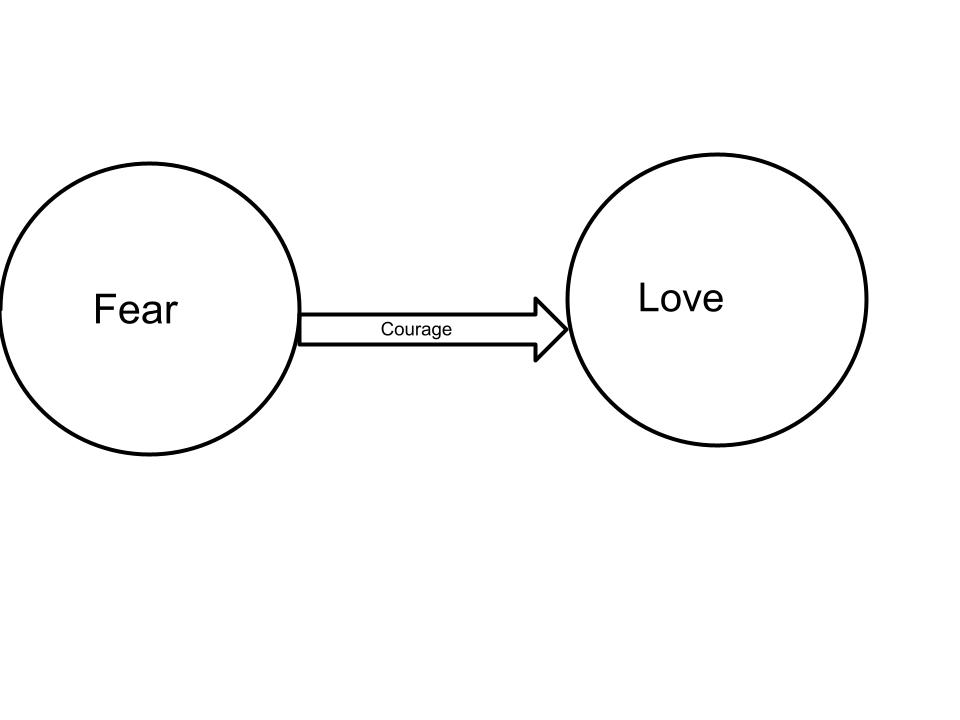
I think it is useful to simplify what we do in life into two motivations. A reflection question I’ve been asking myself is, “Is love driving me right now or is fear?” If I can’t honestly say “love,” then I know I need to adjust my course. To move from fear to love takes courage. Courage is not fearlessness, rather it is taking loving action even when you feel afraid.

Lennon’s quote seems in line with the bible. First John 4:18 says, “There is no fear in love. But perfect love drives out fear because fear has to do with punishment. The one who fears is not made perfect in love.” This verse suggests that love and fear are incompatible, but what does John mean what he says fear? “Fear has to do with punishment . . .” The fear that John is talking about is fear of standing before God’s judgement. He says in v. 17 that if we live in love as Jesus did, we will have confidence in the day of judgement. When we do good for others out of fear that God will punish us, we make our good deeds about ourselves and not the other person.

My critique of Lennon’s quote is that there are things in life such as hunger, thirst, or sexual lust don’t fit into the love/fear binary. I don’t think the root of hunger has to be a love for living or a fear of starving. Hunger can just be hunger. Also, I don’t think fear and love are always mutually exclusive, but first let me define my terms.

Love, Fear, Desire

Fear is an emotional and physical response to perceived danger or threat (real or imagined). Everybody feels fear, the question is, will fear keep you from living the life God has for you?

I define love as desiring the good of another. Love is often accompanied by feelings of joy and delight, but also opens the door to heartbreak. We can choose love even when we don’t feel like it.

We feel desire whenever we want or feel like we are lacking. It is the force that drives us to act. We can think of desire as the drive to meet your internal wants and needs. Desire is neither inherently good nor bad. Factors such as the magnitude of the desire, the object of the desire, and the means by which you fulfill the desire will determine whether it is right or wrong. We also have competing desires within us. For example, the desire to get fit and the desire to stay on the couch.

In his book You Are What You Love, James Smith explains how desire (eros) with love (agape) are connected yet distinct. “In its truest sense, eros signals a desire and attraction that is a good feature of our creaturehood. Instead of setting up a false dichotomy between agape and eros, we could think of agape as rightly ordered eros: the love of Christ this is shed abroad in our hearts by the Holy Spirit is a redeemed, rightly ordered desire for God. You are what you desire.” Aligning our desires to God’s will is the lifelong work of following Jesus.

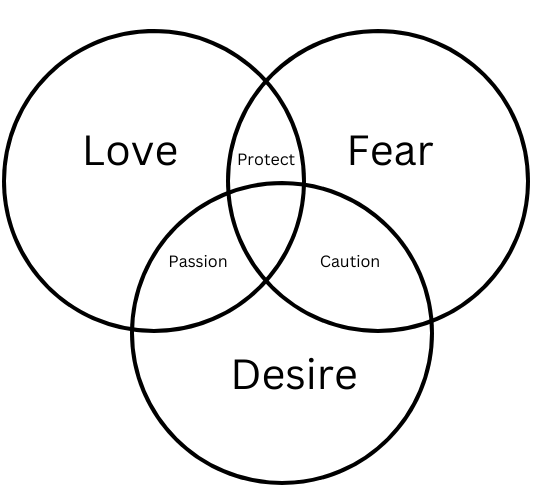
There may be some situations in which love, fear, and desire are all present. A man might be attracted to a woman (desire). Maybe he also realizes that being with him will help her to flourish and become more who God created her to be (love). But, at the same time, he his terrified that she will reject him (fear). Below is a graphic that shows how love, fear, and desire can overlap.

Imagine a hungry hunter who is stalking a bear. He is motived by his desire to kill the bear and harvest it’s meat for food, but he should also be keenly aware that the bear could easily maul him to death (fear). His best course of action will be to proceed with caution. Now imagine that the same hunter has his ten year old son with him. When they come across the bear the father will put himself between his son and the bear to protect him. After he kills the bear, they have a feast and rejoice together in the spoils of their labor. Out of love for his family and his desire to eat, the hunter faced his fear.

I think everyone should work to answer: “What do I want? Who do I love? and What am I afraid of?” We so often go through life without seriously considering why we do what we do. Examining which motivations drive us is a great starting place to living a meaningful and intentional life.

“There are two basic motivating forces: fear and love. When we are afraid, we pull back from life. When we are in love, we open to all that life has to offer with passion, excitement, and acceptance. We need to learn to love ourselves first, in all our glory and our imperfections. If we cannot love ourselves, we cannot fully open to our ability to love others or our potential to create. Evolution and all hopes for a better world rest in the fearlessness and open-hearted vision of people who embrace life.”

John Lennon

Putting God to the Test

The author of Hebrews defines faith as “confidence in what we hope for and assurance for what we do not see” (Hebrews 11:1). You don’t need faith for what you already see, that is just sight. Faith is trusting in God even when things don’t look right or when we can’t see what the outcome will be.

Another definition of faith I have been pondering is “putting God to the test.” This might sound strange if you are more familiar with the bible. When Jesus was tempted by Satan in the wilderness one of the ways he responded was by quoting Deuteronomy 6:16, “Do not put the Lord your God to the test” (Matthew 4:7). If Jesus explicitly tells us not to put God to the test, why would I argue that putting God to the test is actually an expression of faith?

I will start by showing how it is wrong to put God to the test, then show how it is right to put God to the test, and conclude with some ways you could apply this to your life.

When Testing God is Wrong

For the second temptation of Christ, Satan took Jesus to the highest point in the temple in Jerusalem and said, “If you are the Son of God throw yourself down. For it is written, ‘He will command his angels concerning you, and they will lift you up in their hands, so that you will not strike your foot against a stone'” (Matthew 4:5-6).

This is where Jesus responded, “It is also written, ‘Do not put the Lord your God to the test.'”

Why would this have been wrong for Jesus to jump? Didn’t he trust that God would protect him until his time was at hand? I think there are a couple reasons why jumping would have been wrong.

First, God the Father already proclaimed the identity of “beloved son” over Jesus (Matthew 3:17). Satan was trying to make Jesus prove his sonship rather than trusting the Father’s words. If you take God at his word, you won’t need to push the boundaries. This is similar to Satan’s temptation of Adam and Eve, “Did God really say . . .?” (Genesis 3:1). Adam and Eve tested whether or not they would die after eating the forbidden fruit.

Imagine you went to a wedding where the wife told the husband that she would love him and stick by him no matter what. Then the husband wanted to see if she really meant it. Will she stay if I stop helping around the house? Will she stay if I cheat on her? Will she stay if I become abusive? This is not how you treat someone you love. It is one thing for the husband to be honest about his shortcomings and quite another thing to intentionally push the boundaries of what his wife can endure.

Second, Satan is trying to get Jesus to go beyond what the Father called him to do. Jesus did not frequent the big cities. He did most of his ministry in small towns, attracting crowds of poor and desperate people. He often did things to avoid the praise of people. He said that he only came to earth to do the will of his Father. God never called Jesus to make himself a spectacle. Rather, God called Jesus to serve, bring restoration and healing, and ultimately die on the cross for the sins of humanity. Jesus knew that Satan’s temptation was beyond what God called him to do.

An example from my life where I foolishly put God to the test was my senior year of high school. I was new to my faith and didn’t have much guidance, so I attempted to do both football and cross country in the same season. I reasoned that it shouldn’t be possible for anyone to do both sports, so if I succeeded I would have used that as evidence for God’s strength and power.

Unsurprisingly, this experiment failed after a couple weeks. My body could not handle the strain because it was never meant to. In hindsight I should have realized that God made me to play football and invested my energy into doing the best I could on the field and loving my teammates and coaches. I didn’t test God by thinking, “God isn’t real unless he empowers me to do both sports.” But I did think that God needed my help to let others see his greatness (which he didn’t). I didn’t trust that God would work through my simple obedience. I believe I would have had a bigger impact if I was more intentional with those who were already in my sphere of influence, rather than trying to have God turn me into Superman.

Testing God is wrong when it takes the place of trusting God. Testing God is right when it is a means of trusting God.

When Testing God is Right

About 25% of the book of Genesis is devoted to Abraham. God called Abraham to leave his family and town and go to the land that God would show him. Abraham had many inspiring examples of faith, and some significant moral failures. After 25 years of waiting, God miraculously gave Abraham a son, through whom the whole world would be blessed.

However, Genesis 22 states, “Some time later God tested Abraham.” He told him, “Take your son, your only son, who you love — Isaac– and go to the region of Moriah. Sacrifice him there as a burnt offering on a mountain I will show you.”

And Abraham obeyed.

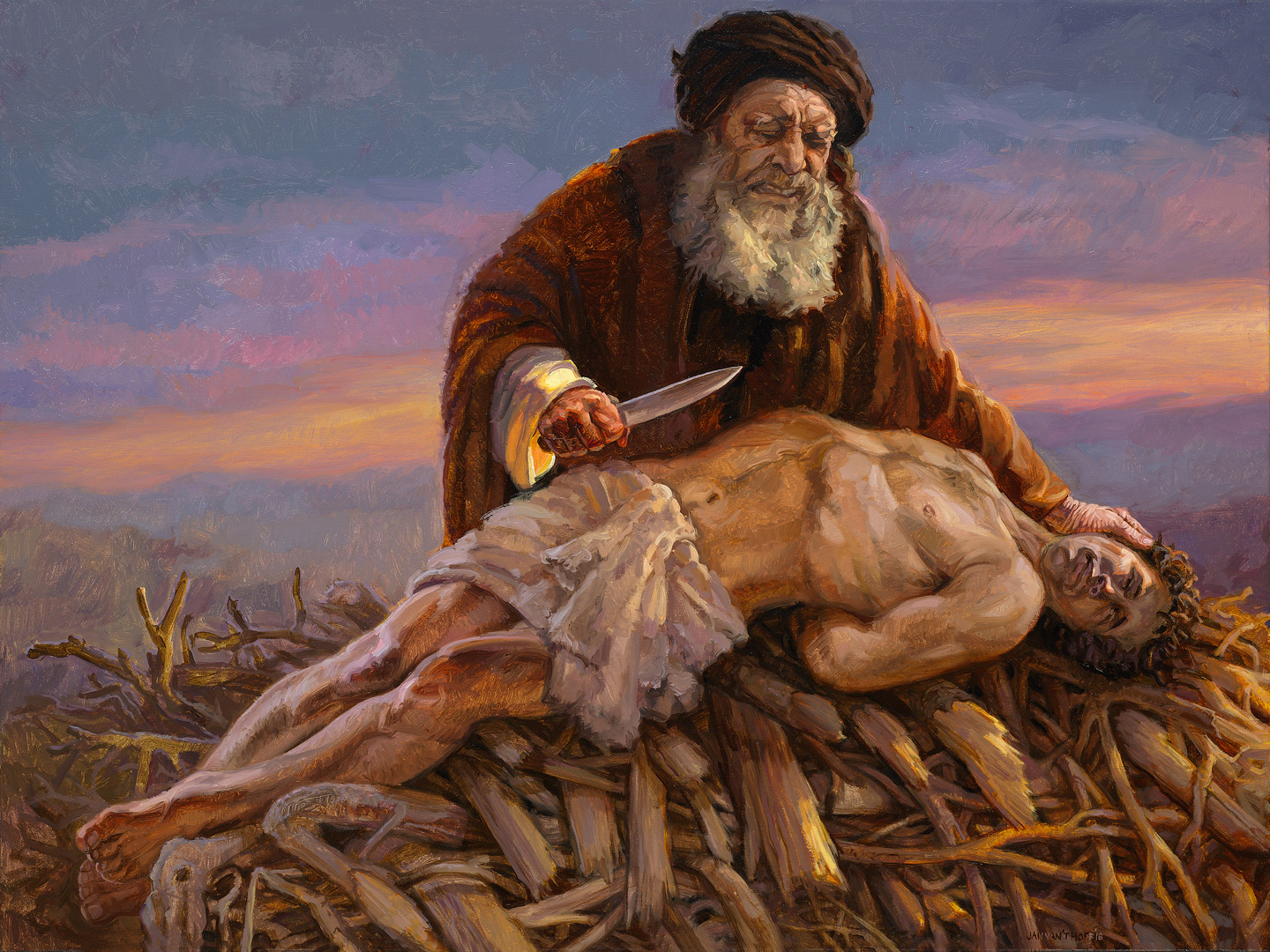
He and Isaac climbed the mountain, Isaac carrying the wood and Abraham carrying the knife and fire. After building an altar, Abraham tied up his beloved son and raised the knife to slay his child . . .

The text states that God tested Abraham, but I think Abraham was also testing God.

God clearly promised that the covenant would be established through Isaac as an everlasting covenant for his descendents after him (Genesis 17:19). Abraham is holding two things in tension. On the one hand, Isaac is the one through whom the blessing of the whole world was to come. On the other hand, God commanded Abraham to kill his son. There were only four options for this tension to be resolved:

  1. Abraham refuses to obey God.
  2. God lets Isaac die, thus showing that he does not keep his promises (thus not worthy of our worship).
  3. Abraham goes through with killing Isaac, then God raises him from the dead.
  4. God prevents Abraham from killing his son and provides a substitute (which is what happened).

Abraham was testing God to stay true to his promise even if it meant doing the impossible (raising the dead). Abraham was obedient to the point of giving up what he loved most because he believed that God was trustworthy.

Notice, the only reason Abraham went through with the sacrifice was because God commanded him. He did not attempt to sacrifice his son to see if God would stop it. That would have been putting God to the test in the negative way we discussed above.

To summarize, testing God is wrong when it takes the place of trusting God. But, testing God is right when it is a means of trusting God. Below are some examples of how this type of faith can be lived out today.

Positive Examples of Putting God to the Test

  • Giving generously, trusting that God will provide you with everything you need (Mat 6:25-34).
  • Sharing the gospel with a hardened atheist, trusting that God has the power to change any heart (1 Tim 1:15).
  • Persevering when things seem unbearable because God promised to work things out for good for those who love him (Rom 8:28).
  • Forgiving someone rather than seeking revenge because you trust in God’s divine justice (Rom 12:19).
  • Sharing a hard truth with someone because it is impossible to please God and people (Gal 1:10).
  • Praying even when you don’t feel like it, trusting that God hears and cares (1 Peter 5:7).
  • Taking a professional risk, resting in the fact that you’re worth is not found in success.
  • Sticking with those who are wandering in their faith, because the God who began a good work in them will carry it on to completion (Phil 1:6).
  • Many Christians throughout the centuries have been martyred because they trusted that eternal life in God’s paradise was worth more than the world could offer them.

Imagine a man who was considering going skydiving. How would we know that he had faith that his parachute would open?

Only if he jumps. He can talk all he wants about how great the parachute is, but until he jumps out of the plane and puts it to the test, he doesn’t really trust it. It is the same with God. We might say we trust him, but until we jump out of the plane and take part in risky obedience, our words are empty. “Faith without works is dead (James 2:17).

May God give us this type of faith!

The Kingdom of God is like a Golden Snitch

I love the Harry Potter books and movies. My wife and I watch all 8 movies every year and frequently listen to the audiobooks before going to bed. Even if HP isn’t your thing, I hope you stick with me. Jesus often taught using parables. Following in my Rabbi’s footsteps, I want to show you how the kingdom of God is like a Golden Snitch.

Understanding Quidditch

Quidditch is a popular game in the wizarding world, consisting of seven team members on flying brooms. There are 3 Chasers, 2 Beaters, 1 Keeper, and 1 Seeker. The Chasers control the Quaffle, trying to throw it through one of three hoops which are guarded by the Keeper. Whenever the Quaffle goes through a hoop, the scoring team is awarded 10 points. The Beaters are the enforcers on the team. They protect the Chasers and Seeker from the two flying Bludgers, and also attempt to direct the Bludgers at the opposing team. The Seeker’s job is to find and catch the golden Snitch, a small golden ball that moves incredibly fast. The game ends when the Seeker catches the Snitch. By catching the Snitch, his team is awarded 150 points.

So, How is this like the kingdom of God?

1. The Value of the Snitch

First, the Snitch the most valuable object in the game. A team could be down by 14 goals and still win the game if the Seeker finds the Snitch.

Jesus tells us to seek first the kingdom of God (Matthew 6:33), and compares the kingdom of God to a man who found a fine pearl, and in his joy sold everything he owned to possess it (Matthew 13:44-46). There are a lot of things in life that we can and ought to seek. If we don’t look for a job, we won’t be able to provide for ourselves. If you don’t seek a spouse you will never have children. But seeking God’s kingdom is more important than any of these.

2. In the Game, but Not of It.

Second, the Seeker is in the game, but he is not playing the same game as the other six team members. Seekers are concerned with the Snitch and never attempt to score with the Quaffle or stop the other team from scoring.

Paul told Timothy, “No one serving as a soldier gets entangled in civilian affairs, but rather tries to please his commanding officer” (2 Timothy 2:4). There are many games that the world plays: get the most power, have the most status, sleep with the most women, accumulate the most money, to name a few. If we want to be seekers of God’s kingdom, we can’t focus on the “quaffles” around us. We all live in the world, but when you become a follower of Christ, your primary citizenship is in heaven (Philippians 3:20).

It is so easy to get distracted, but we must always recenter on the true Snitch.

3. Slow and Steady

Third, looking for the Snitch isn’t efficient. For most of the game the Seekers are sort of flying around aimlessly. It appears that they aren’t contributing to the rest of the team, but the work they are doing is vital to achieving the end result.

Jesus valued people that society did not. He spent time with children and said that the kingdom of God belonged to those who were like children (Matthew 19:14). He often withdrew to quiet places to pray even when people were begging for his attention. He spent most of his time in small villages and didn’t have much of a presence in the big city. His closest followers were uneducated, blue-collar guys rather than religious elite. Wouldn’t it make more sense to go after those with influence instead?

God’s kingdom functions differently than the world. The kingdom of God is like a mustard seed. It starts as a tiny seed, but one day will grow and spread and become the largest plant in the garden (Mark 4:30-32). Because God is patient and gracious, he often transforms us and others more slowly than we would like. This slow work allows roots to grow deep into the soil so that it can bear the weight of growth and the storms of life.

Fun fact, the average apple tree takes 4-5 years before it produces any fruit. It makes sense for spiritual fruit to behave similarly.

Conclusion

What are you looking for?

What do you desire most?

Everybody is pursuing something, but not everybody has articulated what it is they seek. Many of us end up on the conveyor belt following society’s expectations, or we float about from one dopamine hit to another without giving it much thought.

God made you unique and he made you for a purpose. I pray that you would find the purpose and passion that God wired in you, and then give you the courage and diligence to chase after that with all your heart.