The Relentless Love of Forrest Gump

My wife and I recently watched Forrest Gump. Since I had seen the film many times I was paying close attention to the relationship between Forrest and Jenny this time around. A friend of mine argues that Jenny is the worst character in movie history, and I think he makes some valid points. She led Forrest on. She constantly abandoned him for guys who used and abused her. She only came back to him when she felt like she had nowhere else to go, rejected his marriage proposal, had sex with him and left the next morning before he woke up. A few years after this Jenny invited Forrest to visit and said, “I want to apologize for anything that I ever did to you, cause I was messed up for a long time, and . . . ” This half apology was right before shattering his universe by telling him that he had a son. She then asked Forrest to marry her mere months before dying of AIDs, resulting in Forrest raising their child alone. In so many ways, Jenny is just the worst. But I think the love story between Forrest and Jenny closely parallels another love story: the one between Christ and his church.

A Brief Defense of Jenny

I’m not condoning or excusing any of Jenny’s behavior, but if we consider her past, her future makes sense. In Jenny’s experience, all love with men had a sexual component to it. She learned from her father that she was only desirable as a sex object. There was no warmth, kindness, or safety from the man who was supposed to give that to her. It’s no wonder that she kept picking the wrong guy and felt undeserving of Forrest’s love for her. I imagine that it was uncomfortable for her that Forrest saw her as perfect when she was filled with shame and self-hatred (to the point of contemplating suicide). None of this justifies how she treated Forrest, but maybe we can show her kindness as we critique.

Forrest’s Love for Jenny

Forrest’s love for Jenny is both beautiful and heartbreaking. Their friendship started when Jenny showed kindness to him when others were cruel. She looked past his simple mind and the braces on his legs to see a good heart and a true friend. Forrest was a safe place for Jenny to get away from her sexually abusive father. Forrest and Jenny were like “peas and carrots” until they went to college. Then things got complicated. Forrest and Jenny had one intimate encounter that ended . . . abruptly. Jenny then had various relationships with men, worked as a nude model/stripper, then traveled around the country getting high sleeping around with various partners.

Forrest, on the other hand, protected Jenny from abusive men, thought about her constantly, wrote her dozens of letters that all went unread. He even named his shrimp boats after her. When Jenny showed up at Forrest’s house out of the blue, he took care of her, picked flowers for her, and was a wonderful host. To Forrest, Jenny was perfect. He didn’t see her as damaged goods at all. Jenny once asked him, “Why are you so good to me?” To which Forrest simply responded, “You’re my girl.”

As cynical adults we might look at Forrest and Jenny and conclude that Forrest didn’t have the intelligence to understand that Jenny was taking advantage of him and that he was worth being in a relationship with somebody who reciprocated his feelings and the effort he put in. We might even say that Jenny is toxic and he should have cut her out of his life for good. However, I wonder if we struggle to understand Forrest because his love looks more like God’s love than human love?

Love Like Christ

Romans 5:6-8 says, “You see, at just the right time, when we were still powerless, Christ died for the ungodly. Very rarely will anyone die for a righteous person, though for a good person someone might possibly dare to die. But God demonstrates his own love for us in this: While we were still sinners, Christ died for us.” While we were weak and powerless, Christ died for us. Like Jenny, we run after idols, lovers who promise us the world only to leave us feeling empty. God promises that there is abundant joy and eternal pleasures in his presence (Psalm 16:11), yet we constantly turn our backs on him.

Sometimes, like Jenny, I ask God, “Why are you so good to me? You know where I’ve been and all that I’ve done. You see the depths of my heart and soul and still you pursue me and give me good things? Why?”

“Because you are mine. As high as the heavens are above the earth, so great is my faithful love for you. As far as the east is from the west is how far I removed your transgressions. What can separate you from my love? Neither death nor life, nor angels nor rulers, nor things to come, nor powers, nor height nor depth, nor any other created thing can separate you from my love. I don’t see you as trash but as glorious.”

Forrest was Jenny’s faithful protector. Quick to forgive and overflowing with love for her, even when it wasn’t reciprocated. He never asked Jenny for anything except her presence. That love looks a lot like God’s.

Sally Lloyd Jones writes in the Jesus Storybook Bible, “You see no matter what, in spite of everything, God would love his children with a Never-Stopping, Never Giving Up, Unbreaking, Always and Forever Love. And though they would forget him, and run from Him, deep in their hearts God’s children would miss Him always, and long for Him — lost children yearning for their home.”

Jenny didn’t know it at the time, but in all of her travels and searching, she was really looking for Forrest’s unconditional love. You might not know it, but in all of your striving and searching, you are really looking for the unconditional love of Christ. Everyone and everything else will let you down, but Jesus never will. Don’t feel ashamed. Just come home.

If you liked what you read, subscribe below! Also, if there is a movie that you want me to review, let me know in to the comments!

Leave a comment

Two Rules for Life

The other day I imagined coaching my son’s youth sports team and I wondered what team rules would resonate with small children. The two rules that came to mind are listen well and do your best. As I pondered these more, I realized that you can get pretty far in life by living by these two rules. Let’s explore what these look like in practice.

Listen Well

A quote from the movie Fight Club sums up a lot of conversations: “Most people don’t listen when you talk, they are just waiting for their turn to speak.” Listening well is a great life skills that will help you in every area of life. Here are some ways in which you can listen well:

  • Maintain eye contact- In sports this might look like not messing with a ball or your equipment when the coach is talking. In life it might look like putting your phone away during conversations.
  • Don’t interrupt or talk when the other person is talking– It’s impossible to talk and listen at the same time.
  • Ask questions until you understand– Curiosity is a much better default than assuming.
  • Repeat back what the other person said to confirm that you heard correctly– I think this is especially important when conversing with someone who has different beliefs and opinions. Pastor Tim Keller suggests that we represent and engage with our opponents’ position in the strongest form. We should “do all the work necessary until [we] can articulate the views of [our] opponent with such strength that he says, ‘I couldn’t have said it better myself.’”
  • Assume that they know something that you don’t (Credit to Jordan Peterson)- This requires the humility to admit that you don’t have all the answers and truth can be found in unlikely places.
  • If possible, take notes– Our minds tend to wander and we are quick to forget. Taking notes helps with both.
  • Take action– Jesus said that anyone who hears his words yet doesn’t act on them is like a foolish man who builds his house on the sand. When storms come, the house collapsed (Matthew 7:26-27). Imagine a parent who told their kid to clean their room, ony to find the room still a pigsty at the end of the day. The child might’ve heard the parent, but they did not listen.
12 second song that summarizes how to listen well

Do Your Best

There is an amusing story from my childhood when I asked my mom what would happen if I ever got an F in a class.

She said, “I would be disappointed because didn’t do your best.”

I asked, “What if I tried my hardest and the best I could do was an F?”

“That wouldn’t happen.”

“But what if it did?”

“It wouldn’t.”

“But what if it did?”

As you can imagine, this conversation could have gone on forever without getting anywhere. But it brings up a good question to reflect on whenever a task is completed: Did I genuinely give it my best?

A hidden blessing of failures is that it requires us to examine what went wrong. In sports, you can beat a bad team without giving it your best effort. You can also do everything in your power and still lose to a better team. When you win, you tend not to question the results. When you lose, you are forced to ask yourself difficult questions. Here are some questions to ponder whenever it is time to review:

  • How was my preparation?– Imagine a football team that goes into a game without watching any of their opponent’s film. They might try their hardest during the game, but they didn’t do the necessary preparations. There is truth in the saying, “Failing to prepare is preparing to fail.”
  • How did I respond to adversity (internal and external)?– Mike Tyson said, “Everyone has a plan until they get punched in the mouth.” How do you respond when things didn’t go according to plan? Did you respond with hope and courage, or did you give up and lose heart?
  • Did I give in to fear?– Fear can keep us from taking meaningful action. I had teammates in high school who held back in practice and games because they were afraid of giving everything they had and feeling the disappointment of failure. Failure doesn’t hurt as much when you don’t invest your whole heart. The definition of courage isn’t being fearless, rather it is persevering in the face of fear. I think there is value in naming your fears. It’s harder to fight an enemy that you can’t see.
  • What things were outside of my control?– Sometimes life happens. You get sick. Your car breaks down. There is a family emergency. During high school track I got sick with mono. Giving it my best effort looked a lot different after I was sick. That doesn’t mean we should use these as excuses, but I think it is important to name what is and isn’t in our control in order to assess the situation more fairly.
  • Did I prioritize the most important things?– We can do a lot of things right, but if good things keep us from the best things, we are still falling short of our calling. (See the matrix below.)
  • What distracted me?– This is related to the previous question. If you didn’t prioritize the most important things, what was it that distracted you? Were they urgent things that weren’t important? Were they time-wasters like TV or social media? Did you spend too much time gossiping with coworkers? What kept you from the most important tasks and how can you avoid them in the future?
  • Did I ask for help?– I think we often fall short of our goals because we don’t ask for help, either from fear of looking weak, foolish pride that thinks we have all the answers, or maybe you don’t have a network of people you trust. Not asking for help keeps us stagnant. We are created for community and need others. May we have the humility to ask for help when we need it!

Discerning what is Important

One caveat for doing your best is that sometimes we just have to let things be good enough. We can get so fixated on doing things perfectly that we don’t end up getting them done. There are also different responsibilities competing for our time and energy and we have to decide what is most important. A pastor once shared how he preached a sermon without preparing as he normally would because he coached his son’s baseball team the previous day. He didn’t preach his best, but he did the best he could given the circumstances. A way to love his son and the community was to coach the team. To him, the impact he could have coaching outweighed the potential drop in sermon quality.

We must all count the cost. For a college athlete, there might be some weeks that you can’t watch as much film because you have a big paper due. Or maybe you spend less time on a homework assignment because your team was travelling. It would make sense for your quality of work to dip if you are caring for a loved one who is sick. We must constantly be evaluating what are our priorities, and if our actions reflect that they are truly priorities.

Another caveat is that sometimes we don’t have a lot to offer. Every athlete will eventually have a bad game even with great effort and preparation. Sometimes things just go wrong in sports and in life. Everyone will eventually make mistakes and bad decisions. That’s part of being human. I also think of people who suffer with depression or are battling a sickness and have to work extra hard to do seemingly simple tasks. Their best effort looks different depending on how serious their ailment is.

God has given everyone of us great potential and limitations. My potential and limitations will look different than yours or anyone else’s. However, these lines are not set in stone. As we push ourselves to grow, our capacity will increase and our limitations will be pushed further out. May we all have the wisdom and courage to explore those boundaries!

Here is a powerful video about beating perceived limitations and a challenge to give your absolute best.

If you like what you read, subscribe below to stay up to date!

A Formula to Discern Your Calling(s)

Here are three fill-in-the-blank statements to help you discern your purpose:

“I want to live in a world where . . . so that . . . therefore, I . . .”

“I want to live in a world where . . .

This statement is about desire: what do I want? It should be future oriented, possible, and within your sphere of influence. You can’t change the past. You can’t stop loved ones from dying. It is one thing for me to say, “I want to live in a world where the Chicago Bears are Super Bowl champs,” and another for the Bears coaches and players to say the same thing. There are tangible things that they can do to realize that desire, while I can do nothing but watch and hope.

The statements can be personal: “I want to live in a world where I am debt free, or own a home, or weigh X amount, or can run a marathon.” They can also be larger in scope: “I want to live in a world where people are judged by the content of their character not the color of their skin, or where children don’t go to bed hungry, or where my political party is in control.” The statements can either be short-term or long-term, character focused or something more tangible. You can also have multiple things for the different areas of life (financial, professional, personal, relational, spiritual, and physical). The main thing is to be honest about what it is you want.

The first step is naming what you want.

“So that . . .”

This statement is about motivation: why do I want what I want? I chose “so that” rather than “because” because “because” addresses the present reality while “so that” addresses future hope. For example, one might say, “I want to live in a world where I am a college graduate because my parents expect me to.” Compare that with the statement, “I want to live in a world where I am a college graduate so that I can make my parents proud.” “Because” is the reason you got started. “So that” is what makes you persevere.

This step is important for understanding your own heart. As you reflect you might realize you want something for selfish reasons, or you might find that it is something that someone else wants for your life and not something you are passionate about. Maybe an athlete doing this exercise will find that they want to win conference so that they feel a greater sense of self-worth. Then you might ask that person, “Why do you think your self-worth is connected with a game?” Perhaps from here you can help them see that their value doesn’t come from their performance.

Lastly, often the first answer that comes to mind isn’t the only or the most important reason. For example, a college student might say, “I want to graduate college so that I can get a good job.” Why do you want a good job? “So that I can make good money.” Why do you want to make good money? “So that I’ll be able to support my loved ones.” Keep asking why until you get to what’s most important.

The second step is understanding why you want what you want.

“Therefore, I . . .”

This is where the rubber meets the road. This is where we take action to get closer to what we want. If you want to get in better shape so that you can pick up your grandkids when you’re older, your action steps might be eating healthier, exercising, and going to the doctor. MLK wanted to see a world where every human being is treated with dignity. Therefore, he prayed, preached, organized, encouraged, marched, and endured beatings and imprisonments. His hope for a better future motivated him to endure. If you really want something, you will take action on it. If you say you want to live in a world where your political party is in power, you should at least vote. If you do nothing, I question how much you actually want what you say you want.

There is freedom in this stage to experiment and make mistakes. You might not have a clear plan, but you can take steps until clarity comes. Maybe you notice that you are doing what you thought were the right things but it hasn’t gotten you to where you wanted. That might mean it’s time to persevere, or it might mean it’s time to try something new. As you take action, you might also discover that your desires have shifted. That is okay! The journey is often more important than the destination.

As you probably already know, life is hard and it is full of disappointment. There is risk in naming your heart’s desires. When you do, you open yourself up to the possibility having your heart broken. You may never attain what you desire. The Bears might never win another Super Bowl. But I am also reminded of what Paul wrote in 1 Corinthians 15:58, “Be steadfast, immovable, always excelling in the Lord’s work, because you know that your labor in the Lord is not in vain.” There is value in the pursuit even if the result isn’t what you want. It is never a mistake to do the right thing for the right reason. May we have the courage to take steps towards what we desire.

The third step is to take action to attain what you desire.

Working Backwards

If you are having trouble naming what you want, I encourage you to work backwards from your current behaviors. Author James Clear wrote, “Your current habits are perfectly designed to deliver your current results.” If you go to the gym a lot, what are you trying to gain? If you watch a lot of TV, what are you looking for? From these examples, maybe working backwards would sounds like, “I go to the gym a lot so that I can be desirable to the opposite sex, because I want to live in a world where I’m not alone.” Or, “I watch a lot of TV so that I can forget about life for a while, because I want to live in a world that doesn’t hurt so much.”

Take a look at your habits and see if they are getting you closer to what you want most. If not, what needs to change?

Some Problems with the Disney Pinocchio Remake [Spoilers]

I was excited for the Pinocchio remake. I thought Tom Hanks playing Geppetto would be awesome, and I was curious about how they would bring this animated classic to life. However, Disney made changes to this film that radically altered the message. I think the remake lost the story arc of redemption, character growth, and self sacrifice, thus making Pinocchio both unrelatable and not someone to emulate. Here are some of the big differences between the 1940 original and the 2022 remake:

Pinocchio Actually Makes it to School

In the original, Pinocchio was walking to school when he came across Honest John. Honest John convinced Pinocchio that he didn’t need school, and instead he should take the easy street and become an actor. New conscience, Jiminy Cricket, did his best to persuade Pinocchio to go to school, but his arguments fall short. Pinocchio went to be an actor. However, in the remake Jiminy was able to persuade Pinocchio to go to school. When he got there the teacher threw him out because school is only for real children. It was only after being kicked out of school that he went to be an actor.

I think this is a bad decision because Pinocchio begins the film with a strong moral compass. He doesn’t start off as naive, thus doesn’t have much room to grow. In the original, Pinocchio gets tricked by Honest John, but he still makes the decision to be an actor. In the remake, Pinocchio does the right thing, but the schoolmaster didn’t allow him to study. When Pinocchio couldn’t go where he was supposed to, why wouldn’t he pursue acting? Pursuing an acting career became his best option to make his father proud. Rather than portray Pinocchio as a fool with a lot to learn (who also was led astray by a clever tempter), he is made the victim by a closeminded institution. It still ended up being a mistake to go act for Stromboli, but at the time it looked like Pinocchio’s best option since he was not welcomed at school.

The Blue Fairy Doesn’t Free Pinocchio From Stromboli’s Cage

In both the original and the remake, Pinocchio gets a standing ovation when he sings and dances, makes Stromboli a lot of money, and then Stromboli locks Pinocchio in a birdcage in order to continue to exploit him for profit. It is here where the famous nose growth scene happens. In the original, the Blue Fairy shows up and asks Pinocchio why he didn’t go to school. Pinocchio then tells her about monsters putting him in a sack and carrying him away. With each lie his nose grows longer until he begs the Blue Fairy to forgive him and help him out of the cage. The message is clear: lying is wrong and “a boy who won’t be good might just as well be made of wood.” The movie explicitly shows that Pinocchio needed the Blue Fairy to forgive him and rescue him.

In the remake, Pinocchio tells Jiminy that he never wanted to be famous and that he hated it when the crowd was cheering for him. However, Pinocchio realized that his nose was getting close to the key that would free him, so he told a fake lie in order for Jiminy to reach the key. After saying sorry to Jiminy his nose returned to it’s normal size. The message is less clear. Is lying okay as long as it helps me get out of my problems? Does saying sorry magically make up for my poor decisions? Pinocchio is portrayed as clever, relatively honest, and doesn’t need help to get out of his mess. The message is less clear whether or not lying is wrong.

Pinocchio Isn’t That Tempted at Pleasure Island

In the original, Pinocchio gets sent to Pleasure Island and immediately gets sucked into Lampwick’s cynical view of the world. Pinocchio naively goes along with everything from destroying art, smoking, and drinking beer. In the remake, Pinocchio is hesitant to partake in any of the ‘pleasure.’ He is disturbed when they go through a room in which the children destroyed clocks, and he doesn’t drink any of the limitless root beer available to him. Pinocchio still partially turns into a donkey. Again, Pinocchio is shown to have a strong moral compass.

Geppetto and Pinocchio Get Swallowed Together

In the original, Pinocchio learns that his father had been swallowed by Monstro. Pinocchio then ties a stone to his donkey tail, sinks to the bottom of the ocean, and searches for the great whale. In the remake, Pinocchio water skies out to Gepetto who is sailing and they both get swallowed up together.

I think this was a mistake by the remake. The original does a much better job showing Pinocchio’s bravery. Pinocchio willingly sent himself to the deepest, darkest part of the ocean and intentionally confronts the great sea beast. In the remake Pinocchio is aware that Monstro lives in that part of the sea, but he does not seek out the beast.

Pinocchio Turns Himself into a Speedboat

The means of escape is roughly the same in both the original and remake: Pinocchio and Gepetto build a fire to make Monstro sneeze. However, getting away from Monstro is where things get strange. In the original, Gepetto and Pinocchio franticly row their raft together. In the remake, Pinocchio spins his legs really fast and essentially becomes the motor of a speed boat.

Pinocchio’s superpowers make it hard for kids to relate. If kids see an ordinary little boy (I guess technically he’s not a real boy yet, but I think you get what I mean) showing bravery in the face of great danger, they might feel a sense of courage to face their own fears. Seeing a super puppet overcome a great obstacle is less relatable to kids. They might say, “Of course Pinocchio could face Monstro! He has super speed. I don’t have super speed, so what chance do I have to face my Monstro?”

Gepetto Dies and Pinocchio Revives Him

In the original, Pinocchio rescues Gepetto at the cost of his own life. He displays what Jesus calls the greatest love, to lay down your life for the sake of another (John 15:13). However, in the remake Gepetto dies and Pinocchio is able to revive him with his magic tears (because his tears are magic now). Pinocchio’s task was to prove himself brave, truthful, and unselfish. The original succeeds in this because giving your life for the sake of another is the most unselfish thing a person could do. Weeping at the loss of your father is natural, but not unselfish. Also, normal children (or any human for that matter) cannot revive the dead with their tears. Pinocchio is again not relatable to the audience.

Pinocchio Never Becomes a Real Boy

In the original, the Blue Fairy both revives Pinocchio and turns him into a real boy. By his self-sacrifice Pinocchio proved himself to be brave, truthful, and unselfish, thus becoming a real boy. See below how Geppetto’s weeping is turned to joy:

The remake’s take on this scene was probably the most disappointing part of the film. After Gepetto is revived he says to Pinocchio, “You swam faster than any clipper ship could sail. No real boy could ever do such a thing . . . You will always be my real boy. There isn’t a single thing I would change about you. I am so very proud of you and I love you so very much.” Essentially, it is better for Pinocchio to be a puppet than a real boy because of the superpowers that it gives him.

Jiminy Cricket concludes the movie by saying, “People say he was transformed into an honest-to-goodness real boy. Did that actually happen? Who knows! But I do know one thing for sure: In his heart Pinocchio is as real as any real boy could ever be.” This is not a satisfying ending for me, but it isn’t surprising given how society today thinks about identity and reality. It would be too exclusive for Disney to say that there is such thing as a “real boy,” (what is real? what is a boy?) so they resort to self-identification. “It doesn’t matter what anyone says, if you feel in your heart something is true, than it is.” I think it is a slippery slope to deny objective reality and say everything is subjective.

In Conclusion

I think this movie does a good job portraying the unconditional love of the father. Real or not, Geppetto loves Pinocchio as he is. Throughout the movie Pinocchio tries to do things that will make his father proud without realizing he is already proud of him.

Where it falls short is in the story of redemption. In the original movie Pinocchio starts off as a naive puppet who doesn’t know right from wrong, stumbles when tempted with easy pleasure and becomes a jackass, seeks out the beast at the bottom of the ocean, dies to save his father, and rises again a real boy. The glory of the second life is greater than the first.

In the remake Pinocchio has a good grasp on right and wrong from the start and doesn’t need much help getting himself out of trouble. He then ends the movie as a puppet with super powers. The only difference at the end is that he is aware that he has the father’s love.

The message that “you are perfect just the way you are” is very prevalent today. It sounds nice and gives people the warm and fuzzies inside but it is a lie. Nobody is perfect as they are. We are all deeply flawed. We are limited in our capacity, intellect, and appearance. We are also prone to selfishness and malevolence. We all need to grow. We all need to be transformed.

What makes the Christian faith unique is that we receive the unconditional love of the father without doing anything to earn it. “God proves his love for us in that while we were still sinners Christ died for us” (Romans 5:8). It also doesn’t hide the fact that we are all sinners. We need to experience the transforming love of God. I am much different today than I was in high school or college. I have grown and matured in a lot of ways. And I have so much more to go. The Christian faith is a stumbling pursuit to live out who God created us to be, and it’s a pursuit I’ll be stumbling with until Christ returns or he calls me home to heaven. I’ll conclude by a quote from John Newton (who composed Amazing Grace):

I am not what I ought to be, I am not what I want to be, I am not what I hope to be in another world; but still I am not what I once used to be, and by the grace of God I am what I am.

Boobie Miles: Misplaced Hope and Identity

Friday Night Lights is one of the best football movies ever made. It is a story about a high school football team in west Texas, the pressures and expectations to win the state championship, and the highs and lows they experience throughout the season. At the center of the team is all-star running back, Boobie Miles.

Boobie is the definition of the total package. He’s fast, strong, and agile, and can block, catch and throw. At the beginning of the film we see every major Division I football program wants him. He is cocky, but has the skills to back it up. When asked about his grades he says that he is a straight A student, because the only subject is football. The team and the whole town put their hopes on Boobie to win the state championship. The stars seem to align. Then the unthinkable happens . . .

Boobie injures his knee in the first game of the season.

Boobie then watches from the sidelines, first as his team struggles and then thrive under the excellent gameplay of Sophomore running back, Chris Comer. Throughout this time Boobie downplays his injury, insisting that he will be back in action in a couple weeks, that him sitting out is precautionary. Which brings us to the clip below. Boobie gets his knee checked out be a specialist. However, the hospital is located in his rival town the week they play each other.

When the doctor tells Boobie that he can’t play because of the damage done to his knee, he becomes indignant. He doesn’t trust that the doctor is being honest with him, rather he believes that the doctor is trying to keep him from playing so that Midland will win the football game. He accuses the doctor of trying to take is football career.

What happens next is predictable. Boobie told the coach that the doctor cleared him, gets put in the game, and injures his knee worse than before. This next clip shows Boobie when it is official that he will never play high school football again.

Boobie starts the scene with the same swagger he always had with his teammates. He cleans out his locker as his teammates look on with sadness, disbelief, and pity. A look that communicates “You were the best of us. This shouldn’t have happened to you. I don’t know if we can do this without you.” Boobie gives them one last encouragement and swaggers out of the locker room.

Once Boobie is in the safe presence of his uncle his true heart come out. He sobs heart-wrenching sobs, “What am I gonna do now? I can’t do nothin’ else but play football.” All the work he put in, wasted. All his dreams of making it to the pros and buying his uncle a house, shattered.

Anger and Grief are Windows to our Heart

Nobody ever told Boobie that he was more than a football player. His entire identity revolved around his performance on the field. Football was his purpose, his passion, and his hope for a future. In short, football was his god. He never considered that his god would let him down, so he never developed other interests or became a well-rounded human being. Boobie’s emotional reactions show us how much being a football player meant to him.

God gave us emotions for a reason. Our emotions reveal what is important to us. They reveal what we love. Anger is the feeling connected to what we perceive to be unjust, a wrong done, or something not being as it should. It can also be a response to fear. Boobie was angry at the doctor because he believed the doctor was unfairly keeping him from doing what he loved. Grief is what we feel when we lose something or someone important. For Boobie, he lost his football career and the potential to use football to have a better financial future. It is not sinful to feel these things. There are many examples in the Gospels where Jesus wept or expressed anger and he lived a sinless life.

As fallen people, our issue is not that we feel strongly, but that we feel strongly about the wrong things. Saint Augustine taught that the essence of sin was having disordered loves. We are meant to love God first then love others. Our love and desire for other things should come after these. Here is an example from my life.

There are times when my 3-month old son won’t stop crying and, depending on my patience level, I will either feel sad or angry. When I feel sad, I am responding with empathy. I hurt that he is hurting. When my response is anger, I feel like he is wronging me by not letting me have some peace and quiet. In the moment, my desire for peace and comfort is greater than my desire to love and empathize with my son. My loves get out of order. (This isn’t me beating myself up. I know God has grace especially for sleep-deprived parents.)

Boobie was not wrong to love football and I am not wrong for enjoying comfort. Both are gifts from God that he gives for us to enjoy. The problem comes when we allow the gifts to become the most important thing in our life. I thank God that Jesus died for my disordered loves and the harm they cause me and others. It is a lifelong struggle to reorder our loves to put God in first place. But he gives grace for when we fall short, and power and wisdom through his Spirit to love what we ought as we ought.

I encourage you is to pay attention when you have a strong emotional reaction. What did you feel? What happened that made you feel that way? What did you desire in that moment? Is that desire properly ordered? How might God be trying to get your attention in the midst of this?


“Now physical beauty, to be sure, is a good created by God, but it is a temporal good, very low in the scale of goods; and if it is loved in preference to God, the eternal, internal, and sempiternal Good, that love is as wrong as the miser’s love for gold, with the abandonment of justice, though the fault is in the man, not in the gold. This is true of everything created; though it is good, it can be loved in the right way or in the wrong way – in the right way, that is, when the proper order is kept, in the wrong way when that order is upset.”

City of God, XV.22

An Imagined Conversation Between Jesus and a Seeker

This exchange is based on Matthew 16:24-26, “Jesus said to his disciples, ‘If anyone wants to come with me, he must deny himself, take up his cross, and follow me. For whoever wants to save his life will lose it, but whoever loses his life because of me will find it. What does it benefit a man if he gains the whole world yet loses his soul? Or what can a man give in exchange for his soul?'”

Jesus: I have seen you in the crowd listening to me speak. Why do you always stand at a distance?

Disciple: I didn’t know if I could approach you, or what it would take to come to you. So I played it safe and watched and listened.

Jesus: There are three questions you must answer if you want to be my disciple:

  1. Do you want to come with me? (Yes or No)
  2. Will you deny yourself? (Yes or No)
  3. Will you take up your cross? (Yes or No)

If you answered “yes” to these three questions, follow me! If not, feel free to go your own way.

Disciple: Rabbi, I do want to follow you. There is no one who teaches with the authority that you do, and I sense that there is life in your words. But what does “denying yourself” mean?

Jesus: Do you remember the rich young ruler? (Matthew 19:16-30) What kept him from giving away his possessions?

Disciple: His wealth and possessions was where he found his comfort, security, worth, and identity. He was afraid of losing all that he put his hope in.

Jesus: And what about the Pharisees? Where do they get it wrong? (Matthew 23)

Disciple: They hold on to their appearance of righteousness at all costs. They love to look good before others and neglect their heart, which is the most important thing. They also look down on others and are unwilling to associate with those who are “unclean.”

Jesus: Indeed. And I ask you, what are you trusting in that is not me? Where are you performing instead of living authentically? Whose approval are you looking for? If you want to follow me, you must give that up.

Disciple: And what of this cross? It is a horrible instrument of torture and death devised by wicked and cruel men. I wouldn’t wish that on my worst enemy. It feels too cruel even for the most vile of sinners. What could I possibly do to deserve this?

Jesus: Is a student greater than his teacher (Matthew 10:24-26)? If the world hated me, doesn’t it make sense that it would also hate those who are like me? Don’t assume you will be treated well or fairly by the world.

Disciple: So are you saying that I will have to die for you?

Jesus: I assure you, you will have to die many deaths before it is all said and done.

Disciple: What then will survive?

Jesus: Tell me, which is more valuable: gold that is still in ore form, or that which has been refined with fire?

Disciple: The pure gold.

Jesus: Precisely! All the imperfections and dross are burned away and only what is precious and true will remain. In the same way, those who suffer for my sake are being refined. The road I’m calling you to is not an easy one. You will encounter many griefs and trials, and things will try to trip you up. But I promise that it’s worth it! Anything you give up in this life you will receive back 100 fold in the life to come. You will be on the front lines against the kingdom of darkness, bringing light, goodness, and restoration. Therefore, I urge you not to grow weary of doing good. You are planting seeds for my kingdom harvest, and you will reap at the proper time if you do not give up. Will you follow me?

Top 10 Books I Read in 2021

Here are the top 10 books I read in 2021 that most influenced how I think and live.

10. What Doesn’t Kill Us by Scott Carney

The basic premise of this book is that modern humans have become soft because of our reliance on technology. By being comfortable 24/7 our bodies and minds start to atrophy. Journalist Scott Carney set out to prove Wim Hof to be a false guru and a dangerous charlatan, but in the process became a pupil. Carney explores the “Wim Hof Method” (a mixture of breathing exercises and gradual cold exposure) and tests to see if the human body is capable of more than we ever thought possible. This book is very well written, weaving in both personal stories as well as scientific testing.

9. Atomic Habits by James Clear

Atomic Habits is an excellent resource for habit formation. The idea presented in the book is to consistently take small action steps, looking for 1% improvement, that over time leads to the compound interest of a changed life. He stresses that it is more useful to focus on systems rather than goals. For example, if you have a goal to read 20 books this year, the system might be reading one page of a book with my morning coffee each day. If you have a good system, the results will take care of themselves. “The quality of our lives often depends on the quality of our habits.” The framework that he goes into detail for habit formation is listed below:

How to Create a Good Habit

  • The 1st law (Cue): Make it obvious.
  • The 2nd law (Craving): Make it attractive.
  • The3rd law (Response): Make it easy.
  • The 4th law (Reward): Make it satisfying.

How to Break a Bad Habit

  • Inversion of the 1st law (Cue): Make it invisible.
  • Inversion of the 2nd law (Craving): Make it unattractive.
  • Inversion of the 3rd law (Response): Make it difficult.
  • Inversion of the 4th law (Reward): Make it unsatisfying.

8. Secular Creed by Rebecca McLaughlin

This book is a great resource for teaching Christians how to navigate culture. Rebecca McLaughlin addresses five secular claims: “Black Lives Matter”, “Love is Love”, “The Gay-Rights Movement is the New Civil-Rights Movement”, “Women’s Rights Are Human Rights”, and “Transgender Women Are Women”. This book is both well reasoned and compassionate. It does not read as an “us vs. them” apologetics book, but rather a gentle and bold discussion through tough topics. A key argument of this book is that while many of the secular claims are a response to and rejection of Christianity, without the Christian faith these claims lose the foundation upon which they’re built. She writes, “If there is no God who created us in his image, then human equality is a myth. Human beings have no ‘no natural rights, just as spiders, hyenas, and chimpanzees have no natural rights.'” (Here she quotes atheist scholar Yuval Noah Harari’s Sapiens: A Brief History of Humankind).

7. Sabbath by Wayne Muller

This book does a great job explaining the what and the how of Sabbath. While the author and I have different theological convictions, I still found this book to be enlightening. Muller says of the Sabbath, “Sabbath is more than the absence of work; it is not just a day off, when we catch up on television or errands. It is the presence of something that arises when we consecrate a period of time to listen to what is most deeply beautiful, nourishing, or true. It is time consecrated with our attention, our mindfulness, honoring those quiet forces of grace or spirit that sustain and heal us.” All of nature follows a rhythm, morning then evening, high tide then low tide, inhale and exhale. In the same way, our bodies, minds, and souls need time of rest. We need time to unplug and find restoration. Muller wonders, “How did we get so terribly lost in a world saturated with striving and grasping, yet somehow bereft of joy and delight?” The Sabbath is an invitation to stop from striving and delight in the gifts and goodness of God.

He gives some traditional Sabbath practices: “Traditionally, Sabbath is honored by lighting candles, gathering in worship and prayer, blessing children, singing songs, keeping silence, walking, reading scripture, making love, sharing a meal.” This book gave me new ways of thinking about and practicing Sabbath.

6. 12 Rules for Life & Beyond Order by Jordan Peterson

Technically, these are two books but I am counting them as one because they read like two volumes of the same set. I found these books to be both deep and practical. Peterson references a wide range of religious, scientific, and pop-culture material. One thread that runs throughout these books is the relationship between order and chaos. Book one mostly addresses creating order out of chaos. Living in a postmodern world, the foundations of many institutions which societies have been built upon for millennia (family, religious, political, etc.) have been weakened. This leaves individuals untethered from the great virtues that existed in traditional cultures (honor, respect, love, truth). Without these foundations individuals are now caught on the spectrum between moral relativism (a belief that there are no moral absolutes and what was right or wrong at one time and place might be the opposite at another time and place) and ideologies (a way to view a complex world through one simplified lens. For example, seeing everything through race, class, or gender).

We need order and routine to keep our head above water when the world we live in is full of uncertainty. However, once we have established a sense of order, it is then important to introduce some chaos/uncertainty into your life. This is the idea of challenging yourself, taking risks, and pushing your boundaries in order to grow as a person. These books are a great resource for learning how to take responsibility and live a meaningful life.

5. How People Change by Timothy Lane and Paul David Tripp

How People Change explores on a practical level how God changes lives. They explore how people who have been Christians for years, who go to church and read their bibles seem to see so little fruit in their lives. The bible passage that informs their teaching is Jeremiah 17:5-10:

Thus says the LORD: “Cursed is the man who trusts in man and makes flesh his strength, whose heart turns away from the LORD. He is like a shrub in the desert, and shall not see any good come. He shall dwell in the parched places of the wilderness, in an uninhabited salt land.
“Blessed is the man who trusts in the LORD, whose trust is the LORD. He is like a tree planted by water, that sends out its roots by the stream, and does not fear when heat comes, for its leaves remain green, and is not anxious in the year of drought, for it does not cease to bear fruit.”
The heart is deceitful above all things, and desperately sick; who can understand it? “I the LORD search the heart and test the mind, to give every man according to his ways, according to the fruit of his deeds.”

Difficult circumstances (Heat) are going to occur in life, and these things are often out of our control. Usually when heat comes our desire is to change our circumstances, but God is interested in transforming us in and through our circumstances. Heat in life reveals to us ways that we are trusting in things apart from God for our joy and identity. When that occurs, God invites us to identify where we are going wrong, turn back to what is true about us and God, and walk in love and power that God provides through his Holy Spirit.

4. You Are What You Love by James K.A. Smith

This book challenges the idea that more knowledge changes lives. Our hearts are made to desire, and what we desire is made evident by our habits. There is often a disconnect between what we know and how we live. He writes, “To be human is to be on a quest. To live is to be embarked on a kind of unconscious journey toward a destination of your dreams . . . You can’t not bet your life on something. You can’t not be headed somewhere. We live leaning forward, bent on arriving at the place we long for.”

This book helped me discern what my vision of the good life actually is (not just what I tell people it is), and gave me categories of how to build my life around the love of God and the things that are most important.

3. Gentle and Lowly by Dane Ortlund

Gently and Lowly was a breath of fresh air for my weary soul. It is in in-depth look at God’s heart for sinners and sufferers. Ortlund cites many of the great preachers throughout church history. Some of the ways he describes God’s love for us feels scandalous, but that is because we humans naturally project our false assumptions onto God. The heart of God is grace and compassion. That is the desire he has at the deepest level. People often only view God as their judge, eager to dole out punishment when we do wrong. It is true that there will come a time for God to judge the sins of the world, but his heart for us is to experience his mercy and grace which is found in Christ. He quotes John Bunyan (author of Pilgrim’s Progress):

But I am a great sinner, say you. “I will in no wise cast out,” says Christ.

But I am an old sinner, say you. “I will in no wise cast out,” says Christ.

But I am a hard-hearted sinner, say you. “I will in no wise cast out,” says Christ.

But I am a backsliding sinner, say you. “I will in no wise cast out,” says Christ.

But I have served Satan all my days, say you. “I will in no wise cast out,” says Christ.

But I have sinned against light, say you. “I will in no wise cast out,” says Christ.

But I have sinned against mercy, say you. “I will in no wise cast out,” says Christ.

But I have no good thing to bring with me, say you. “I will in no wise cast out,” says Christ.

If you are in a place where life is tough and God feels distant, I would highly recommend Gentle and Lowly.

2. The Meaning of Marriage by Timothy Keller

My wife and I read this together as part of the pre-marital counseling process and it was instrumental in shaping our views and expectations going into marriage. Keller defines marriage as, “a lifelong, monogamous relationship between a man and a woman. According to the Bible, God devised marriage to reflect his saving love for us in Christ, to refine our character, to create stable human community for the birth and nurture of children, and to accomplish all this by bringing the complementary sexes into an enduring whole-life union.” Our culture seems to have a love/hate relationship with marriage. On the one hand, many people are pessimistic because divorce rates are so high and even if you stay together the idea is that you are stuck in a boring sexless marriage. On the other hand, many also expect getting married to solve their problems. “If I could just meet the right person, then I would be happy and life would be great.” Keller paints a picture that both more glorious then the than Hollywood depicts, but is also honest about the challenges. Ultimately, marriage is a picture to the world of a God who sacrificed everything out of love for his bride and to see her become everything she could be. Our marriages are a small, imperfect picture of God’s love and commitment to his people.

1. The Ruthless Elimination of Hurry by John Mark Comer

The Ruthless Elimination of Hurry argues that one of the greatest challenges to the Church is hurry. Hurry comes when we have more things to do for the time we have. We tend to pack our schedules with so much activity that we don’t leave space to hear from God or give time to things that refresh our souls. One quote that I liked was that Jesus doesn’t offer us an easy life, that doesn’t exist. Rather, he offers us an easy yoke. Matthew 11:28-30 in the Message says, “Are you tired? Worn out? Burned out on religion? Come to me. Get away with me and you’ll recover your life. I’ll show you how to take a real rest. Walk with me and work with me—watch how I do it. Learn the unforced rhythms of grace. I won’t lay anything heavy or ill-fitting on you. Keep company with me and you’ll learn to live freely and lightly.” This book offers a guidelines for how to live “freely and lightly.”

Comer argues that modern living sees humans more as machines than as souls. We are told that our worth is found in what we produce and what we consume. Modern culture does not value “being”. Boredom and inactivity are perceived to be the great enemies of our day. Comer states, “To walk with Jesus is to walk with a slow, unhurried pace. Hurry is the death of prayer and only impedes and spoils our work. It never advances it.”

To live the out the fullness and freedom of the life offered to us in Christ, we must ruthlessly eliminate hurry from our lives.
Cool Runnings: Gold Medals and Idolatry

In order to get into the Olympic spirit, I watched Cool Runnings last weekend. If you haven’t seen it, it is a hilarious movie about the first Jamaican bobsled team. It depicts how they learn a new sport, enter a new world, and strive to compete as equals as four black men in an all white sport.

In the two-minute clip below, the captain of the team asks his coach why he cheated as a competitor, thus costing himself and his team two gold medals. (He asks around the 30 second mark).

Coach responds, “I had to win. You see, I’d made winning my whole life. And when you make winning your whole life, you have to keep on winning. No matter what.”

He then concludes with a beautiful quote, “A gold medal is a wonderful thing. But if you’re not enough without it, you’ll never be enough with it.”

Being a winner and a gold medalist gave Coach Irving Blitzer a sense of meaning and identity. The idea of living as a “loser” was so unthinkable for Irv that he dishonored the sanctity of Olympic competition by cheating. For Irv, winning was his god. And his god required him to sacrifice his morals and integrity.

Making a good thing an ultimate thing is the definition of idolatry, and every human is prone to make idols out of good things. In the quote above you could replace “gold medal” with just about anything and it would hold true:

“A spouse is a wonderful thing. But if you’re not enough without it, you’ll never be enough with it.”

“A house is a wonderful thing. But if you’re not enough without it, you’ll never be enough with it.”

“Wealth is a wonderful thing. But if you’re not enough without it, you’ll never be enough with it.”

“A degree is a wonderful thing. But if you’re not enough without it, you’ll never be enough with it.”

“Relaxation is a wonderful thing. But if you’re not enough without it, you’ll never be enough with it.”

When we look to something or someone other than God to be our purpose and identity, we will be disappointed. We will compromise on what is truly important to attain that which is less important. Majoring in the minors, so to speak. We see examples of this in parents who spend so much time at work to provide for their family that they end up neglecting those they love most. Again, hard work and providing for your family are good and God-honoring things, but when work keeps you from doing what God has called you to do toward your loved ones, then it might be becoming an idol.

“How Will I know If I’m Enough?”

Derice concludes the video clip with a question I believe is in the back of everyone’s mind, “How will I know if I’m enough?” For me, this question loomed under the surface for a lot of my life. Did getting straight A’s make me enough? Being successful in sports? Having a significant other? Getting a Master’s degree? Fitting in and being liked by others? Being a ‘good Christian’? All of these things were based on my performance, and all of them left me feeling insecure (whether I was succeeding or not). Thankfully, God offers a better way.

The basic premise of the Christian faith is that humans are not and will never be enough. We are selfish, self-promoting, and limited in our capacity to do the right thing for the right reasons. In spite of this, God the Father sent Jesus to live a perfect life that we could not live, to die on the cross to pay the penalty for our wrong living, and to rise from the dead in power. If you turn from sin to believe in Jesus, your performance no longer defines you. God sees all of your flaws and still loves you to the point of dying for you. If he accepted us then, how could he not accept us now?

Christ is enough, so I don’t have to be.

Ten Year Reflections

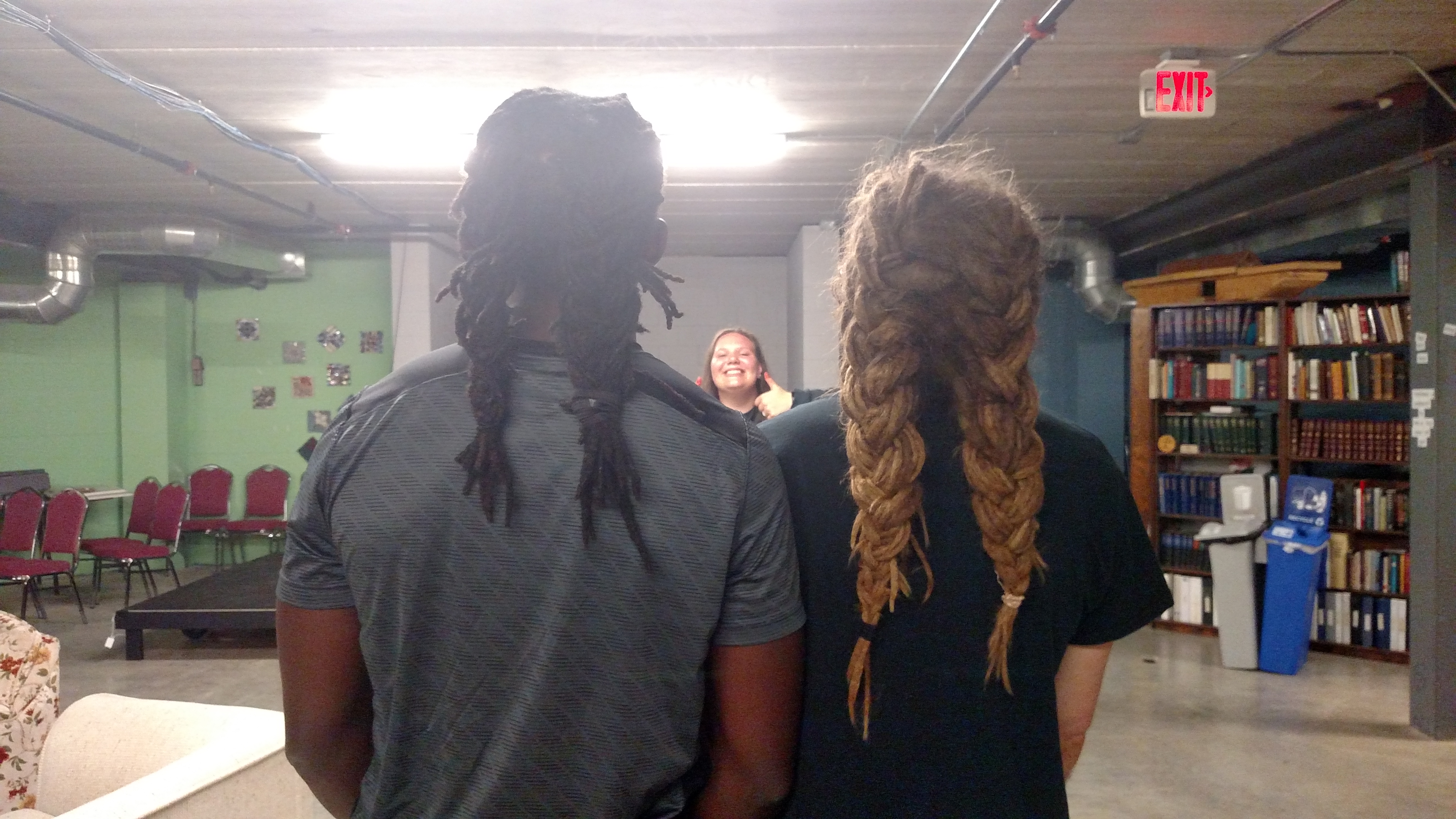
On Saturday November 12, 2011 I made a decision that would end up changing my life. That was the day I dreaded my hair. How did changing my hairstyle change my life? First, let’s consider where I was at in life ten years ago.

Origins

A frequently asked question I get is why did I decide to get dreadlocks? Was it for some spiritual or political statement? The answer is less sexy than you might think. I just wanted to grow my hair out for a whole calendar year. Then I looked into dreadlocks and thought it would be something cool and different to close out the year. In the past I’ve had a mohawk, a mullet, and a shaved head. I liked wearing and doing things that stood out (maybe that is me wrestling through “middle child syndrome?”). So, I figured dreading my hair was the next logical step in my hairstyle evolution.

However, at the time I didn’t consider how long it would take to get dreads. My last hair cut was in November of 2010, right before my senior basketball season. I then grew my hair for a year and decided I would dread my hair the week after my first college football season (I didn’t want to get dreads during the season because I didn’t know what it would be like under the helmet).

So, on a cloudy November Saturday morning, my friend Alex and I went to a lounge at our college, threw some How I Met Your Mother on the TV, and he started separated my hair into different sections (there ended up being about 75 tuffs of hair). The next step was to then backcomb each of the sections. The whole process took about 10 hours. For all of Alex’s hard work, I paid him by buying a pizza that we shared (was that a dirtbag move? Perhaps.). Neither of us had any idea the process would take that long, so Alex and I made an agreement in which I would keep my dreads one year for every hour that he spent (thus the 10 years). Also, I didn’t realize that dreads take about 6 months before they start looking decent. It was practically unthinkable that I would cut them before I had time with them looking good.

Life with Dreadlocks

I wasn’t sure how people would react to my new hairstyle, but here are some of the responses and questions I’ve had over the years:

  • I was mistaken for a teammate who is mixed race and also has dreads.
  • Some of the chefs and custodial workers who were black would strike up conversations with me more often. And Tony and Hurvey behind the grill at Café Mac would hook me up with larger portions of food.
  • I once attended an historically black church with a teammate and some of the congregants asked my friend if I was black/mixed race.
  • Numerous people have either asked to buy drugs from me, sell drugs to me, or if I knew where they could go to get high. In Mexico vendors would call out, “Ayy Rasta! You want a pipe??”
  • Random people on the street have called out to me saying they like my hair.
  • Random people ask if they can touch my hair (which is weird).
  • If there is another white person with dreads, people think I look “exactly like them” and that we “could be twins” even if our hairstyle is the only thing we have in common.
  • People often say/ask, “You can’t wash them, can you?” That is usually how it is posed, not, “Can you wash them?” And yes, I can wash them, I just don’t do it as often because they absorb a lot of water and getting them dry is a hassle.
  • When my beard was bigger I was mistaken for a homeless person.
  • Kids in South Africa called me “Coach Rasta.”
  • A couple people have accused me of cultural appropriation.
  • For the past ten years, my hair has been my primary identifier. People often remember me as “that guy with dreads.”
  • When talking trash to a guy from Ripon, he yelled out, “F*** you, hippie!” Which gave me a good laugh.
  • My dreads were what caught my wife’s eye the first time she saw me.
10 years of friendship going strong.
Braiding my hair was fun.

What Have My Dreads Meant to Me?

At the time of writing, my hair has been the longest commitment I’ve ever had (with the possible exception being my relationship with God). Having dreads fits into my persona as a “walking contradiction.” I’ve been asked if I prefer to fit in or stand out, and I strongly desire both. I don’t like being the center of attention and at times want to feel like just another member of a team- a background player. At the same time, I don’t want to be overlooked or forgotten, and I often fear that my presence doesn’t matter. Maybe my hair has been a way to make an impression and stick in people’s minds? It’s harder to slip through the cracks when you look different. That has felt both like a blessing and a curse.

A few months ago the thought of cutting my hair produced anxiety in me. I don’t quite know why it felt so overwhelming. I know I am not defined by my hair, and yet my hairstyle has become a part of me. The thought of cutting my hair felt a little bit like losing a good friend. Someone who travelled the world with me. Went through college and grad school with me. Was right beside me as I transitioned from boyhood to manhood. Was with me as I went from singleness to married life. Maybe I’m afraid that cutting my hair will mean a complete detachment from parts of my life that meant so much to me? Without dreads will I turn into a boring stiff? Just another guy? Would being “just another guy” be so bad? Would I feel a need to compensate be getting more tattoos? My friend Al (see above) suggested I get a head tattoo to make up for the lack of dreads. I don’t think I’m bad enough for that . . .

Maybe my hair has been a reflection of how I feel on the inside. If internally I feel like an outsider, why not have an appearance that shows that to be true? I wonder if having short hair will feel like I’m denying who I feel I am? If my hair is a way I present myself, what will I be presenting with short hair? Will I have to depend on my personality alone to be interesting in social settings? Maybe that’s not such a bad thing though. I might surprise myself.

It’s hard to imagine what life would be like if I never got dreadlocks. I honestly don’t know what my life would look like if I didn’t make that decision ten years ago. I’m grateful for the things I’ve learned and the experiences I’ve had with my hair. I’ve learned a lot about myself and a little more about the world because of it. I don’t know what the next ten years will bring, but I trust by God’s grace I will continue to grow even if my hair doesn’t.

Wrangle Squad vibes.

My beautiful bride let me keep my hair for the wedding.

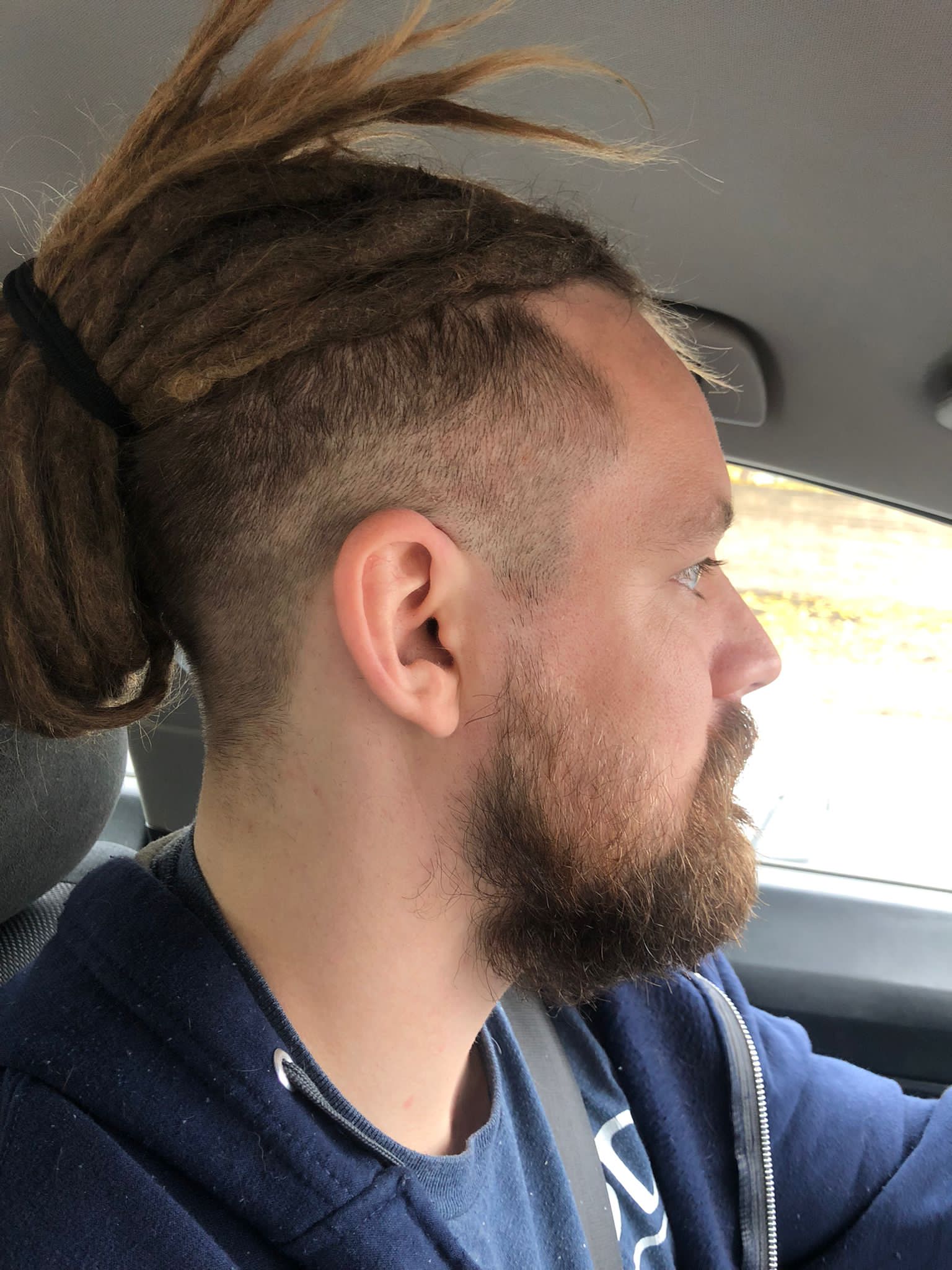
I’ve starting cutting my hair in stages to make it easier emotionally. I’ll probably have normal hair by Summer 2022.

thor ragnarok [#romanovagrp #buckyrogersgrp] the cutest bean also SORRY  THERE ARE SO MANY POSTS ON MY STORY LMAO just ignore them oops q… | Marvel,  Thor, Hair looks
I think I’m in a better place now than Thor was…

The Invitations of Jesus vs. the World

Saint Augustine once said of God, “You have made us for yourself, O Lord, and our heart is restless until it finds its rest in you.” We are all restless creatures of desire. As the Teacher of Ecclesiastes said, God has put eternity in our hearts (3:11). One of the problems of being human is that we long for the infinite, but we are surrounded by finite, things that break down, become boring, and are limited. Not knowing what to do with the hole in our heart, we seek to fill it with more. More money, more alcohol, more TV, more sex, more approval, more achievements, more tasty food, etc. None of these things are bad in and of themselves, but they are unable to satisfy our deepest longings. The things outside of God that captivate our minds and hearts always over promise and under deliver. For the rest of this post I will compare invitations of Jesus with the invitations of the world, and consider who is able to deliver on their promise.

Invitations of God

Matthew 11:28-30: Jesus said, “Come to me, all of you who are weary and burdened, and I will give you rest. All of you, take up my yoke and learn from me, because I am gentle and lowly in heart, and you will find rest for yourselves. For my yoke is easy and my burden is light.”

Isaiah 55:1-3: “Come, everyone who is thirsty, come to the waters; and you without money, come buy, and eat! Come, buy wine and milk without money and without cost! Why do you spend money on what is not food, and your wages on what does not satisfy? Listen carefully to me, and eat what is good, and you will enjoy the choicest of foods. Pay attention and come to me; listen, so that you will live. I will make an everlasting covenant with you, the promises assured to David.”

The invitation in these two passages is to rest, to carry an easy yoke, to come and enjoy the best foods and wines without having to pay a cent. Weary and burdened is a good way to describe our world. When you ask how somebody is doing, there is a good chance that they will respond, “Busy.” We are busy, tired, and anxious people longing for peace and rest, yet we constantly spend our time and money on that which does not give us the rest that we need. Below are some of the things that promise peace, rest, and fulfilment:

Invitations of the World

TV: “Come to me all who are bored, tired, and unsatisfied with your life and I will give you escape and entertainment.”

Smartphone: “Come to me all who are lonely, curious, and bored and I will show you what you are looking for along with detached connections.”

Amazon: “Come to me all who lack, come and buy from me and have it in two days without leaving your home.”

Social Media: “Come to me all who are lonely, stressed, and bored and I will give you superficial connection and a feeling that your life doesn’t measure up to others or a feeling of pride for how much better you are.”

Snooze Button: “Come to me all who are sleepy and tired and I will give you 10 more minutes of rest . . . maybe just 10 more . . . ok, 10 more but this is the last time . . .”

Spotify: “If anyone has ears to hear, let them listen to whatever song or podcast that they want (for a small price).”

Video Games: “Come to me all who are bored, lonely, and yearn to accomplish great things, and I will bring you into a new and exciting world that you can explore risk free.”

Tinder/Dating Apps: “Come to me all who are busy and desire companionship, and I will give you a quick hook up that has as few strings attached as you want.”

Pornography: “Come to me all who lonely, tired, and horny and I will give you temporary relief with a perfect looking person who will never reject you.”

Sports (Fan): “Come to me all who yearn to be a part of something greater than yourself, who desire beauty and a different story than the one you’re living in, and I will show you young men and women doing their best at playing a game. You can be as kind, cruel, or passionate as you want.”

Alcohol: “Come to me all who are worn out from a long day. Let me take the edge off. I can even make you forget your problems and stressors in your life.”

Junk Food: “Come to me all who are stressed, hungry, and busy and I will excite your taste buds and fill your stomach, but I won’t nourish the body. I will make you crave me so much that you won’t worry about the long term effects.”

I am not saying that these things are inherently wrong (except for porn, I can’t think of anything redeemable about that). I like watching TV, I use Spotify about everyday, I have a beer every once in a while, and I enjoy watching sports and snacking. However, if we look to these things to fill the hole in our heart, we will constantly be disappointed. Have you every had a Netflix binge day and the next day you felt just as tired and restless as the day before? How about trying to eat away negative feelings but you see that those feelings don’t go away? Maybe hit the bars at the end of a long week, have a few too many and then have to carry the weight from the work week plus a hangover? These things promise us peace, rest, and comfort, but they will let us down.

Ephesians 5:18 says, “Don’t get drunk with wine, which leads to reckless actions, but be filled with the Spirit.” One way to paraphrase this verse is, “Don’t try to fill the hole in your heart with alcohol (or TV or social media or porn or junk food), it will leave your life off worse and make you feel more empty in the long run. Instead, look to God’s Holy Spirit because only an infinite God can fill the infinite void inside of you.” Jesus is the only one who delivers on his promise to give peace, rest, and satisfaction. By looking to Jesus first, we can put things in their proper place and receive them with thanksgiving. You can use these things rather than these things using you.

As you think about what you consume, I think a good question to ask yourself is, “Can I genuinely thank God for this?” If there is anything you feel weird about telling God “thank you” for, it is probably a good sign that you should step away from it for a time. For example, there are times when I watch a show or two and I feel a sense of joy and contentment, after which it is easy to step away and do something else. There are other times when I know I need to go to bed, but I can’t stop myself from watching another episode. In the latter case, I would struggle to thank God for that show because I am not using it as God would want. In those moments I look to the show to give me peace and rest that should be God’s job to give.

Matt Chandler Quote: “Find the things that stir your affections for Christ  and saturate your life in them. Find the things that rob you of tha...”

A couple final questions I’ll leave you with are, what are things that make you feel true joy/ stir your affections for God/ make you feel a sense of awe and wonder? Conversely, what are are things that steal your joy and affections for God? What might it look like to intentionally design your life so that you fill your life with what gives you joy cut out the things that rob your joy?