What compels a hero to act? As far as I can tell, the hero in an adventure story tends to be motivated by one or a combination of these three objectives:
Seek Treasure
Defeat Evil
Survive Danger
This came to mind when thinking about the motivations of the characters in The Hobbit and the characters from Lord of the Rings. Bilbo and the dwarves set out from the Shire to reclaim their gold and home (seek treasure). Frodo and Sam left the Shire in order to destroy the ring of power, and thus destroy Sauron (defeat evil). At first I thought these might be the only two motives, but then I thought about movies like Cast Away or The Day After Tomorrow or the book Robinson Crusoe in which the main characters are trying to survive the horrible predicament they find themselves in (I guess one could argue that they are seeking life and trying to prevent death, but I think having survival as its own category makes more sense). Here is how it plays out in some other movies:
Some Examples
In Pirates of the Caribbean: Curse of the Black Pearl Jack Sparrow told William Turner, “Not all treasure is silver and gold.” Will’s treasure was Elizabeth Swan. He would do anything to rescue her, even give his own life. Jack’s treasure was a ship, which symbolized freedom. Captain Barbosa and his crew, on the other hand, sought to break the curse that they had endured for many years.
In Gladiator Maximus has all three motives. By surviving gladiatorial combat, he seeks his freedom and plots to defeat the wicked Emperor Commodus.
Similarly, Harry Potter seeks various things in the novels: the sorcerer’s stone, Ginny from the Chamber of Secrets, all of the tasks in the Triwizard Tournament, a prophecy, and horcruxes. In the process he faces plenty of danger as he pursues his ultimate goal of defeating Voldemort.
The treasure in whodunits is the truth. Hopefully by finding out “whodunit” the detective also defeats the killer.
In the Iliad the Greeks seek to recover Helen and defeat the Trojans. In the Odyssey, Odysseus and his crew try to get home.
The rebels in Star Wars set out to defeat the evil Empire.
In Die Hard John McClane tries really hard not to die (hence the name), but he also attempts to stop the terrorists.
The kids in The Sandlot recover a baseball signed by Babe Ruth.
In the world of sports the offense seeks points while the defense attempts to stop their opponents.
Why Should You Care?
I think there are at least two reasons why you should care. First, it allows you to get a sense of the overall story arc. You can then judge for yourself whether or not the motives that drive the main characters are compelling. It also helps you keep the big picture in mind when you a plot becomes convoluted. Sometimes characters go on so many side quests that the audience can lose sight of what they are really trying to accomplish.
Second, these categories can help us live out our own stories. If you wake up and imagine that you are the hero of a story, what would you do? What good are you seeking? Money? Love? Friendship? Approval? Comfort? Success? I have used this mindset when on the treadmill. Whatever goal distance I have for the day, I imagine that there is treasure on the other side. This mindset can also help you discern whether or not the things you are doing are getting the results you want.
On the other hand, what evil are you trying to defeat? Maybe it is conquering a sink full of dishes or overcoming an illness. Maybe you are working to overcome an internal struggle or addiction. Mastering the dragon within is often our biggest obstacle.
As we get older we tend to lose our childlike wonder. Days start to feel monotonous and the grind of life with our never-ending to-do lists can wear us down. Understanding the hero’s motivations can help you reframe your tasks as steps on a quest and can add a sense of grandeur to the day.
It is also useful to know that there are seasons when you will be in survival mode. If you find yourself facing a tragedy, it is okay for your goals to take a backseat for a time while you process and heal. Just as Frodo took time to recover in Rivendell, so do we need room to heal when tragedy strikes. If not, we won’t have the strength to pursue the quests we set out to accomplish.
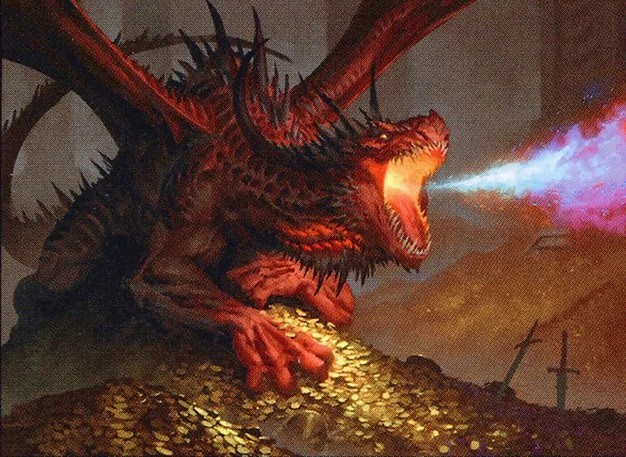
Remember, if you want to get the gold, you have to face the dragon. We live in a world of both abundant treasure and abundant evil. May we have the courage to get out of the Shire.
I was excited for the Pinocchio remake. I thought Tom Hanks playing Geppetto would be awesome, and I was curious about how they would bring this animated classic to life. However, Disney made changes to this film that radically altered the message. I think the remake lost the story arc of redemption, character growth, and self sacrifice, thus making Pinocchio both unrelatable and not someone to emulate. Here are some of the big differences between the 1940 original and the 2022 remake:
Pinocchio Actually Makes it to School
In the original, Pinocchio was walking to school when he came across Honest John. Honest John convinced Pinocchio that he didn’t need school, and instead he should take the easy street and become an actor. New conscience, Jiminy Cricket, did his best to persuade Pinocchio to go to school, but his arguments fall short. Pinocchio went to be an actor. However, in the remake Jiminy was able to persuade Pinocchio to go to school. When he got there the teacher threw him out because school is only for real children. It was only after being kicked out of school that he went to be an actor.
I think this is a bad decision because Pinocchio begins the film with a strong moral compass. He doesn’t start off as naive, thus doesn’t have much room to grow. In the original, Pinocchio gets tricked by Honest John, but he still makes the decision to be an actor. In the remake, Pinocchio does the right thing, but the schoolmaster didn’t allow him to study. When Pinocchio couldn’t go where he was supposed to, why wouldn’t he pursue acting? Pursuing an acting career became his best option to make his father proud. Rather than portray Pinocchio as a fool with a lot to learn (who also was led astray by a clever tempter), he is made the victim by a closeminded institution. It still ended up being a mistake to go act for Stromboli, but at the time it looked like Pinocchio’s best option since he was not welcomed at school.
The Blue Fairy Doesn’t Free Pinocchio From Stromboli’s Cage
In both the original and the remake, Pinocchio gets a standing ovation when he sings and dances, makes Stromboli a lot of money, and then Stromboli locks Pinocchio in a birdcage in order to continue to exploit him for profit. It is here where the famous nose growth scene happens. In the original, the Blue Fairy shows up and asks Pinocchio why he didn’t go to school. Pinocchio then tells her about monsters putting him in a sack and carrying him away. With each lie his nose grows longer until he begs the Blue Fairy to forgive him and help him out of the cage. The message is clear: lying is wrong and “a boy who won’t be good might just as well be made of wood.” The movie explicitly shows that Pinocchio needed the Blue Fairy to forgive him and rescue him.
In the remake, Pinocchio tells Jiminy that he never wanted to be famous and that he hated it when the crowd was cheering for him. However, Pinocchio realized that his nose was getting close to the key that would free him, so he told a fake lie in order for Jiminy to reach the key. After saying sorry to Jiminy his nose returned to it’s normal size. The message is less clear. Is lying okay as long as it helps me get out of my problems? Does saying sorry magically make up for my poor decisions? Pinocchio is portrayed as clever, relatively honest, and doesn’t need help to get out of his mess. The message is less clear whether or not lying is wrong.
Pinocchio Isn’t That Tempted at Pleasure Island
In the original, Pinocchio gets sent to Pleasure Island and immediately gets sucked into Lampwick’s cynical view of the world. Pinocchio naively goes along with everything from destroying art, smoking, and drinking beer. In the remake, Pinocchio is hesitant to partake in any of the ‘pleasure.’ He is disturbed when they go through a room in which the children destroyed clocks, and he doesn’t drink any of the limitless root beer available to him. Pinocchio still partially turns into a donkey. Again, Pinocchio is shown to have a strong moral compass.
Geppetto and Pinocchio Get Swallowed Together
In the original, Pinocchio learns that his father had been swallowed by Monstro. Pinocchio then ties a stone to his donkey tail, sinks to the bottom of the ocean, and searches for the great whale. In the remake, Pinocchio water skies out to Gepetto who is sailing and they both get swallowed up together.
I think this was a mistake by the remake. The original does a much better job showing Pinocchio’s bravery. Pinocchio willingly sent himself to the deepest, darkest part of the ocean and intentionally confronts the great sea beast. In the remake Pinocchio is aware that Monstro lives in that part of the sea, but he does not seek out the beast.
Pinocchio Turns Himself into a Speedboat
The means of escape is roughly the same in both the original and remake: Pinocchio and Gepetto build a fire to make Monstro sneeze. However, getting away from Monstro is where things get strange. In the original, Gepetto and Pinocchio franticly row their raft together. In the remake, Pinocchio spins his legs really fast and essentially becomes the motor of a speed boat.
Pinocchio’s superpowers make it hard for kids to relate. If kids see an ordinary little boy (I guess technically he’s not a real boy yet, but I think you get what I mean) showing bravery in the face of great danger, they might feel a sense of courage to face their own fears. Seeing a super puppet overcome a great obstacle is less relatable to kids. They might say, “Of course Pinocchio could face Monstro! He has super speed. I don’t have super speed, so what chance do I have to face my Monstro?”
Gepetto Dies and Pinocchio Revives Him
In the original, Pinocchio rescues Gepetto at the cost of his own life. He displays what Jesus calls the greatest love, to lay down your life for the sake of another (John 15:13). However, in the remake Gepetto dies and Pinocchio is able to revive him with his magic tears (because his tears are magic now). Pinocchio’s task was to prove himself brave, truthful, and unselfish. The original succeeds in this because giving your life for the sake of another is the most unselfish thing a person could do. Weeping at the loss of your father is natural, but not unselfish. Also, normal children (or any human for that matter) cannot revive the dead with their tears. Pinocchio is again not relatable to the audience.
Pinocchio Never Becomes a Real Boy
In the original, the Blue Fairy both revives Pinocchio and turns him into a real boy. By his self-sacrifice Pinocchio proved himself to be brave, truthful, and unselfish, thus becoming a real boy. See below how Geppetto’s weeping is turned to joy:
The remake’s take on this scene was probably the most disappointing part of the film. After Gepetto is revived he says to Pinocchio, “You swam faster than any clipper ship could sail. No real boy could ever do such a thing . . . You will always be my real boy. There isn’t a single thing I would change about you. I am so very proud of you and I love you so very much.” Essentially, it is better for Pinocchio to be a puppet than a real boy because of the superpowers that it gives him.
Jiminy Cricket concludes the movie by saying, “People say he was transformed into an honest-to-goodness real boy. Did that actually happen? Who knows! But I do know one thing for sure: In his heart Pinocchio is as real as any real boy could ever be.” This is not a satisfying ending for me, but it isn’t surprising given how society today thinks about identity and reality. It would be too exclusive for Disney to say that there is such thing as a “real boy,” (what is real? what is a boy?) so they resort to self-identification. “It doesn’t matter what anyone says, if you feel in your heart something is true, than it is.” I think it is a slippery slope to deny objective reality and say everything is subjective.
In Conclusion
I think this movie does a good job portraying the unconditional love of the father. Real or not, Geppetto loves Pinocchio as he is. Throughout the movie Pinocchio tries to do things that will make his father proud without realizing he is already proud of him.
Where it falls short is in the story of redemption. In the original movie Pinocchio starts off as a naive puppet who doesn’t know right from wrong, stumbles when tempted with easy pleasure and becomes a jackass, seeks out the beast at the bottom of the ocean, dies to save his father, and rises again a real boy. The glory of the second life is greater than the first.
In the remake Pinocchio has a good grasp on right and wrong from the start and doesn’t need much help getting himself out of trouble. He then ends the movie as a puppet with super powers. The only difference at the end is that he is aware that he has the father’s love.
The message that “you are perfect just the way you are” is very prevalent today. It sounds nice and gives people the warm and fuzzies inside but it is a lie. Nobody is perfect as they are. We are all deeply flawed. We are limited in our capacity, intellect, and appearance. We are also prone to selfishness and malevolence. We all need to grow. We all need to be transformed.
What makes the Christian faith unique is that we receive the unconditional love of the father without doing anything to earn it. “God proves his love for us in that while we were still sinners Christ died for us” (Romans 5:8). It also doesn’t hide the fact that we are all sinners. We need to experience the transforming love of God. I am much different today than I was in high school or college. I have grown and matured in a lot of ways. And I have so much more to go. The Christian faith is a stumbling pursuit to live out who God created us to be, and it’s a pursuit I’ll be stumbling with until Christ returns or he calls me home to heaven. I’ll conclude by a quote from John Newton (who composed Amazing Grace):
I am not what I ought to be, I am not what I want to be, I am not what I hope to be in another world; but still I am not what I once used to be, and by the grace of God I am what I am.
 Cultural Eulogy