7 Habits of Mindful and Resilient People

We live in some crazy times. Through the internet we have access to almost infinite information. We can know what is happening anywhere in the world with just a few clicks. Everyday there are new podcasts, TV series, and MUST READ NEWS. Not to mention the seemingly endless stream of emails, text messages, snapchats, tweets, IG notifications, and Facebook messages. We have access to more information than any other time in human history, but we are also some of the most burnt out, anxious, and depressed people. There has to be a better way of being human.

In The Ruthless Elimination of Hurry John Mark Comer states, “What you give your attention to is the person you become. Put another way: the mind is the portal to the soul, and what you fill your mind with will shape the trajectory of your character. In the end, your life is no more than the sum of what you gave your attention to . . . for better or worse.”

What follows are seven simple habits that have helped me emotionally, mentally, and spiritually the past couple years. Five of the seven take no time to implement. They are small ways to push against the narratives of consumerism, performance based identity, and entertainment addiction that dominate our cultural moment. I’ll list all seven habits here for those who don’t like to read full articles, then explain each in more detail below.

  1. Commute in Silence
  2. Pray at Transition Points
  3. Take Cold Showers
  4. Track your Income and Spending
  5. Quit Social Media/Limit the Time you Spend on it
  6. Don’t Sleep with your Phone in your Bedroom/ Put it on Airplane Mode when you Sleep
  7. Keep the Sabbath

Disclaimer: As a Christian, I believe that nobody is strong enough on their own to live a life pleasing to God, or to live the perfect life that they imagine. Every person is made in the image of God, which gives everyone great worth, value, dignity, and potential. We are also finite, limited, and sinful. We can’t do all the things. We can’t go to all the places. We can’t know all the things. And when we try to do all the things it is often motivated by some kind of self interest. I believe our hope is in Jesus. He died to pay the penalty for our sin, rose from the dead in glory and power, and gave his Holy Spirit to empower those who trust in him. That is the foundation upon which these habits stand for me. They are a means to an end, namely experiencing more of Jesus and letting his story shape my life. However, I hope that you find these habits helpful even if you don’t identify with the Christian faith.

1. Commute in Silence

The car has always been a noisy place for me. I would flip through radio stations, blast music, change the station when commercials came on. When I was younger, my family had a sweet van with a VHS player where we’d watch movies even on 20 minute rides. Now that I can connect a smart phone to my car speakers, I can listen to any music, podcast, sermon, or audiobook through the various apps I’ve downloaded. With the infinite options of good things to listen to, why would I recommend going in silence?

I recommend going in silence because many people constantly have noise on in the background to try to drown out what is happening inside themselves. When was the last time you were alone with your thoughts? How did it feel? Was it uncomfortable? The band 21 Pilots has a song called “Car Radio” that illustrates the existential angst one feels when there is nothing distract from deep thoughts. The context of the song is that their car radio was stolen and they are dealing with driving in silence:

Sometimes quiet is violent
I find it hard to hide it
My pride is no longer inside
It’s on my sleeve
My skin will scream reminding me of
Who I killed inside my dream
I hate this car that I’m driving
There’s no hiding for me
I’m forced to deal with what I feel
There is no distraction to mask what is real
I could pull the steering wheel

“Sometimes quiet is violent . . . There’s no hiding . . . Forced to deal with what I feel . . . no distraction . . .” These are all hard things. Silence and meditation aren’t as peaceful as people portray them to be. It is often a mental and spiritual battle. But one that is well worth fighting. So, if I don’t listen to anything, what do I do instead?

Sometimes I pray. I think about the things I have scheduled for the day and ask God to give me what I need to do them for his glory. Sometimes I try to make observations: How many stoplights did I pass on my way to work? What did that graffiti say? Why would someone put that bumper sticker on their car? How many homeless people did I drive by? Other times I just breathe and let my mind wonder. Sometimes it’s on deep things. Sometimes I think about nonsense. Either way, it is a good time for my imagination and creative juices to run wild.

By driving in silence I have found that I am often less distracted and more present when I get to where I’m going. I am learning that I don’t always have to be entertained and my primary identity is not a passive consumer of information. Also, driving in silence literally takes no time to do. All it takes is a little intentionality. Try it for a couple days and examine what happens.

2. Pray at Transition Points

It is so easy to go from one task to another. One meeting to another. One place to another without giving it much thought. And that kinda makes sense. Most people pack their calendars and task managers so full that it feels like there is not enough time to do everything that must get done. However, in all that activity we can forget God– the one who is supposed to be our greatest love. The habit that I’m suggesting is taking a couple seconds in between activities to reorient your heart and mind on God. Here are some ways it can work:

You park your car at the office. You turn off the car, close your eyes, and say “Father, help me work diligently for you and not for man today.” Then you get out of your car and go to work.

You get done with a meeting or phone call and go back to your desk. Maybe you take a deep breath and thank God for what you experienced, then ask for a focused mind as you move to the next agenda item.

After lunch I like to take a walk around the block. Walking slowly and examining the trees, listening to the birds, and reminding myself that God is the creator of all.

When I get home from work, I sit in my car and ask that God help me switch gears to leave work stuff at work and give me the love, grace, and patience to be the husband I need to be.

This habit is easier to implement if you also implement habit one. When there is nothing playing in the car there are no steps to take before praying. From my observations, it seems like most people at transition points check their phone. Who texted me? What did I miss? What did she post? I’m not saying phones are bad, I just think it’s a problem when we go through our day and miss Jesus when we didn’t miss checking social media.

Think about all of the things you do and places you go in a given day and consider how you can intentionally bring Christ into those transitions.

3. Take Cold Showers

On first glance, this habit is probably the one that you think you are least likely to do. You might think, “Yeah right, that sounds like torturing myself, and I’m not one who enjoys torturing myself.” Fair enough. My hope in the next few paragraphs is that you would hold that position less strongly. I’ll start by listing some of the areas that might improve by taking cold showers:

  • Environmentally– you will use less water and electricity, thus less natural resources are consumed.
  • Financially– See point above. Because you are using less, you pay for less. One article estimated you can save about $86/yr by switching to cold showers.
  • Chronically– You will likely spend less time in the shower and more time doing things you are passionate about.
  • MentallyStudies have shown that cold showers can decrease the symptoms of anxiety and depression.
  • Cosmetically– Cold water is good for your hair and skin as hot water strips away natural oils and dries hair and skin out quicker.
  • Physically– Quickens metabolism, improves circulation, boosts your immune system, improves male fertility, and helps muscle recovery.

The final benefit that I see is more spiritual/emotional in nature. By taking a cold shower I am rewriting the narrative that tells me I should be comfortable at all times. Comfort is not my god. A cold shower is an intentional step out of my comfort zone. I look fear and discomfort in the face and I step into it. The hope is that by intentionally stepping into the discomfort of a cold shower, I will then have more courage to step into other uncomfortable situations in life when they arise.

There are many ways to start your cold shower practice. You can take a normal shower and then finish with cold. You can start cold and then finish warm. You can do a minute of cold in the middle. Or you can jump right in and do the whole thing cold.

4. Track Your Income and Spending

This habit is pretty straightforward, but something I didn’t learn until about three years after I graduated college. I usually had a rough idea of how much was in the bank and was pretty good about not overdrafting myself. But my general thoughts were, “I don’t really know how much money I have, but I know it’s not that much. Therefore, I will spend as little money as I can.” As you can imagine, I didn’t feel much freedom or peace about that. Two things that changed how I manage finances is that I read a book titled How to Manage Your Money When You Don’t Have Any , and started using Mint.

How to Manage Your Money When You Don’t Have Any lists 9 steps of a financial roadmap (these are very similar to Dave Ramsey’s 7 Baby Steps:

  • Step 0: On a monthly basis, make sure you are not spending more than you earn.
  • Step 1: Secure your basic needs: food, clothing, and shelter.
  • Step 2: Create a $1000 emergency fund.
  • Step 3: Pay off all debts as fast as possible, other than your home.
  • Step 4: Increase your emergency fund until it reaches 6-10 months of your basic needs.
  • Step 5: Begin saving 15% of your income for retirement.
  • Step 6: If you desire, save for your child’s college education.
  • Step 7: Pay off your mortgage early.
  • Step 8: Express your values with your money.

From my perspective, I would switch I would put Step 8 at Step 1. Jesus teaches, “Where your treasure is, there your heart will be also” (Matthew 6:21). Where we spend our money shows what is truly most important to us. For example, when I shop at Amazon and go to McDonalds, I might be communicating that I value ease and convenience more than local business and healthy eating, which isn’t inherently wrong, but is useful to know. In order to know where our heart is, we have to have a sense of where our money is spent. Thus, Mint.

Mint.com is a free app/website where you can have all of your financial info in one place (loans, checking accounts, savings accounts, credit cards, etc.). It tracks the purchases you make and categorizes them. You can make your own monthly budget and track how much you have spent on a given category and how much is remaining. You can also make different goals (saving, paying off debts, investing, etc.) and track your progress. I then take the info from Mint and populate a spreadsheet (template here). When I get to the end of the month, whatever money I have leftover I either save, put towards debt, or give to a charity I believe in.

The bible teaches that everything in the world belongs to God and humans are his stewards (see Psalm 8). The money and possessions that we have aren’t really ours, they are God’s. And God created us to “be fruitful and multiply,” to be productive contributors. We were not created to merely consume. By tracking your income and spending you can become a wiser steward and push back against the narrative that says we were born to buy.

5. Quit Social Media/Limit the Time You Spend on it

I first deleted my Facebook account when I was a senior in college. This was before Fake News, misinformation, and privacy breaches caused outrage throughout the world. My reasoning was pretty simple: I wasted too much time on social media and used it to procrastinate doing homework. I would tell myself that I would just look at it for 5 minutes then get back to work then BOOM! 45 minutes went by without me realizing. I probably wouldn’t have had the courage to delete Facebook if my friend Jack hadn’t done it first. He deleted it because he wanted to invest in the people who mattered most in his life and decided that a superficial connection with a thousand people wasn’t as valuable as 100 genuine connections.

Since then, documentaries like the Social Dilemma (available on Netflix) have shown how social media is connected to a rise in anxiety, depression, and partisan echo-chambers. Social media platforms don’t care about what is true because they are designed to keep your attention as long as possible (and that is often done by things that stir strong emotions like anger or fear). Everything you see on social media is curated to look exactly how the poster wants it to look. You might be familiar with the people who spend 20 minutes to get ready for a “woke up like this” post. When we perceive the lives of others to be perfect, it can make us less content with our own lives, and if those feelings aren’t dealt with, it can lead to resentment and envy.

In an article titled “Social Media is a Public Health Crisis” the author noted some troubling stats. “Our research has shown that some 40% of social media users would give up their pet or car before they’d give up their accounts. And shockingly, more than 70% said they would not permanently scrap their social media for anything less than $10,000.” That is not normal. We were created to live in a physical world, with a physical body, and interact with 3-dimensional people. Delete your accounts with the confidence that you will be able to connect with those who matter most and your status doesn’t come from the number of likes you have but in your identity in God.

If you aren’t ready to delete your accounts, here are some steps to limit usage:

  • Set your phone to Grayscale mode for part of the day.
  • Decide what is a reasonable amount of time each day to spend on social media (1 hour is about 4% of your day), then tell a close friend.
  • Set app timers on your phone to coincide with the time you decided above. There is an extension for laptops called “Stayfocused” which blocks websites after you reach your set daily limit.
  • Delete social media from your phone, and only check it on your laptop at designated times. (I’d also encourage deleting email apps from your phone.)

Lastly, I’d encourage you to ask yourself if you really feel better after spending time on social media. My guess is that scrolling through social media is so ingrained in most of us that we do it without thinking or considering what it is doing to us. Life is short. Let’s invest our time in the best things because, “What you give your attention to is the person you become.”

6. Don’t Sleep with Your Phone in the Bedroom/Have it in Airplane Mode while You Sleep

What is your bedtime routine? For me, it used to take my contacts out, brush my teeth, lay in bed and scroll on my phone until I absolutely needed to go to bed. Sometimes it was Youtube videos. Sometimes it was email. Sometimes it was news articles. Sometimes I would play games on my phone. Eventually I would fall asleep until my phone alarm would go off. Then I’d snooze. Ten minutes later . . . Snooze . . . How long did this go on for? As long as I could. The bed was too cozy and the alarm so easy to snooze for me to get up right away. Here are some interesting stats I found:

If you want to get a good night’s sleep, being on your phone before bed is a terrible idea. Too much screen time reduces melatonin, making it more difficult to fall asleep. Also, phones are designed to stimulate your mind, which is not what you want when trying to fall asleep. What might be an alternative?

Before you go to bed, put your phone to bed. Maybe that is in the living room or kitchen, but make sure it is in an inconvenient place where you won’t be drawn to it. I would then recommend purchasing a physical alarm clock and putting it across the room so you actually have to get out of bed to turn it off. I have started placing my alarm clock on the floor so that I can start my day kneeling in prayer and stretching.

I acknowledge there might be legitimate reasons for having your phone in your bedroom at night. For example, my wife and I usually listen to an audiobook to fall asleep. Sometimes we have the phone in another room and connect to a bluetooth speaker. Other times we have the phone in the room. When the phone is in the room, I like to put it on airplane mode so I don’t have to think about incoming messages or be drawn to look things up. I then keep it on airplane mode until after spending time reading the bible and praying. This allows me to let the truth of Christ influence my thinking before anyone or anything else. Checking our phone right away in the morning makes us reactive to the day rather than proactively pursuing our mission and the things that truly bring us joy.

See also: “How to Use Your Phone So That It Doesn’t Use You“- 6 Minute video and “3 Reasons Why You Shouldn’t Check Your Phone Within 1 Hour Of Waking Up

7. Keep the Sabbath

What comes to mind when you hear “Sabbath?” Maybe a church service? Maybe you have a concept for a day of rest, but what does that mean? Is Sabbath one of those legalistic rules that Jesus freed us from? Remembering/observing the Sabbath is given in the 10 Commandments and interestingly is listed before murder, stealing, and adultery. It is also the commandment with the longest description. Moses declares the 10 commandments on two separate occasions: once after God freed the Israelites from Egypt, then 40 years later before they enter the promised land. Here are the Sabbath commands side by side:

“Remember the Sabbath day by keeping it holy. Six days you shall labor and do all your work, but the seventh day is a sabbath to the Lord your God. On it you shall not do any work, neither you, nor your son or daughter, nor your male or female servant, nor your animals, nor any foreigner residing in your towns. For in six days the Lord made the heavens and the earth, the sea, and all that is in them, but he rested on the seventh day. Therefore the Lord blessed the Sabbath day and made it holy.- Exodus 20:8-11“Observe the Sabbath day by keeping it holy, as the Lord your God has commanded you. Six days you shall labor and do all your work, but the seventh day is a sabbath to the Lord your God. On it you shall not do any work, neither you, nor your son or daughter, nor your male or female servant, nor your ox, your donkey or any of your animals, nor any foreigner residing in your towns, so that your male and female servants may rest, as you do. Remember that you were slaves in Egypt and that the Lord your God brought you out of there with a mighty hand and an outstretched arm. Therefore the Lord your God has commanded you to observe the Sabbath day.”-Deuteronomy 5:12-15

In the Exodus passage the reason for remembering the Sabbath was that God built the Sabbath into the fabric of the universe. As C.S. Lewis eloquently said, “You can’t go against the grain of the universe and not expect to get splinters.” When we don’t slow down and rest in God we go against how God created us. When we work for six days and rest for one, we enter into the rhythm of God himself.

In Deuteronomy, the reason for observing the Sabbath was that God rescued his people from slavery in Egypt. When the Israelites were in Egypt, they were never allowed a day off. In the eyes of Pharaoh, they were only as valuable as the bricks they produced. Pharaoh saw them as a commodity, not people made in the image of God. The Sabbath was a declaration of independence that they would submit to God’s rule and not Pharaoh’s. I think many of us today have a little Pharaoh inside of us that forbids us to stop working. Maybe you think you’re lazy or weak if you stop. Or maybe you just have too many things to get done. More things to buy. More people to impress Too much debt to pay off. How dare you stop! However, Christ as liberated into freedom (Galatians 5:1). We no longer have to submit to Pharaoh’s yoke. As Christians, we don’t have to keep the Sabbath, just like we don’t have to eat delicious food at Thanksgiving. The Sabbath is God’s gift to us (Mark 2:27), and something our soul desperately needs. So what exactly is Sabbath?

According to Pete Scazzero, the Sabbath is a weekly 24 hour period where you stop, rest, delight, and contemplate. You stop your paid and unpaid work. You stop performing, striving, and producing. You slow down and rest. Take a nap, sleep in, have some time to sit in silence. Do things that let you experience the goodness of God. Maybe it’s a nice meal, a walk in nature, playing games with loved ones, watching a movie that brings out your inner child. And contemplate by making space for prayer, worship, reading, and reflection. Here are some helpful questions that Pete Scazzero gives us to consider as we begin start our Sabbath practice:

  1. What do I need to stop that relates to my work — paid and unpaid?
  2. List the activities that create delight and rest for you?
  3. How can you structure your day to cultivate a greater awareness of God in
    your life and in the world?
  4. What might help you see God’s goodness and miracles all around you today?
    “Whatever we choose to do for Sabbath needs to give us rest and life over time. The challenge is discernment, experimenting to find what works for us and the people we love, what helps us catch our breath and remember who we are as God’s beloved.” Lynne Baab.

Here is what Sabbath looks like for my wife and me (this is descriptive not prescriptive. What works for us will be different for others who have different passions and wirings). We begin our Sabbath at 5PM on Saturday and conclude at 5PM on Sunday. This means that Saturday morning and afternoon is our “Preparation Day” in which we do the chores and errands that we need to do in order to make the Sabbath as restful as possible. For example, if the living room isn’t tidy it is harder to feel rest and peace. We often make a meal in the crockpot so that we won’t have to cook dinner in the evening or lunch the next day. On Preparation Day we ask what are the most important things we need to accomplish in order to enter into God’s rest? We won’t be able to do everything, but getting the biggest things done first is a huge benefit.

At 5PM an alarm goes off on my phone that plays our Sabbath song. We then light candles we set aside for the Sabbath and say a prayer together. Then we either read, talk, or go on a slow walk with our dog. We then have dinner and pick out a movie to watch. We try to pick a movie that is high quality, captures our imagination in a positive way, or points us back to the joys of childhood. We then go to sleep, go to church in the morning, maybe pick up a donut after, then we do things that make us feel rest and delight. We do things like reading novels, doing puzzles, playing cribbage, talking and laughing, going to the dog park or walking around a lake, taking naps, shooting hoops, coloring, journaling, etc. We tend to refrain from email, social media, checking our phones, and we try to limit the amount of TV we watch outside the Saturday night movie.

The Sabbath gives rest for our weary souls. It also expresses our dependence on God. We declare that we can stop working for one day knowing that God is still at work. He is in control and we are not. I have also found that setting aside one day a week has actually made me more productive during the other six days of the week. Knowing that a day of rest and delight is coming, I can work more diligently on the things God has entrusted me to do. One thing to keep in mind about the Sabbath, it is “not to recharge our batteries so we can work harder, but to recharge our souls so that we can live better.”

Lastly, your season of life might make keeping a weekly 24 hour Sabbath near impossible. I think of student-athletes, people who have to work some weekend shifts, and people with young children. There are some legitimate barriers to Sabbath keeping, but what might it look like to take a step toward Sabbath? Could you do 6PM Saturday to noon Sunday? Seven PM to 7AM? Sabbath keeping will take some planning and experimenting, and you might not be good at it at the beginning. But anything worth doing is worth doing poorly. Examine where you are in life, and take one step closer to the Sabbath rest our Heavenly Father offers.

Concluding Thoughts

I understand that I may have given more or less information that you might’ve liked, and that thinking of doing all of these things might feel overwhelming. I would suggest picking 1-3 of these habits to focus on for one month. If you try to immediately start all seven habits at once, you will likely end up doing none of them. Start small and let these habits grow. These habits in and of themselves aren’t anything special. They are not a silver bullet that will solve all of the problems in your life. But I hope that they make you feel a little more at peace. A little more well rested. A little more mindful. A little more resilient. A little more free.


Is God Like a Surgeon or Sadist?

I have been reflecting on suffering lately, and what follows are some thoughts on how God might use the hard things in our lives. I won’t address why we suffer, since there could be hundreds of reasons why. Rather, I’ll focus on what God could be doing in us through suffering.

Imagine you had an infection or some other physical ailment that required surgery to remedy. Now imagine that we live in a world in which anesthetics do not exist and you had to feel every incision.

It would feel like the doctor hated you and was trying to torture you. You might wonder, “How long will I have to go through this? When will this be over? Would it be better if I was already dead? Is the ‘cure’ actually worse than the infection?” Meanwhile, the surgeon would be saying, “I know this hurts, but if I don’t remove this sickness you will die. I want you to have a full life. Just hold on a little longer, I promise there is purpose in the pain.”

Sin is the infection that lives in all of us, even if you have been walking with Jesus for many years. Because we are fallen people living a fallen world, the selfish and wicked tendencies will remain in us until the day we die or the day Jesus comes back. God’s desire for us is that we would turn from our sin and be made holy (1 Thessalonians 4:3), but sometimes it is hard to see our own sin- the ways that we are trusting in things other than God for our hope and purpose. It often takes a hard situation to open our eyes to the brokenness in us and our need for God.

Please don’t misunderstand me. I’m not saying that our suffering is God punishing us for our sin. If you have trusted in Jesus to be your Lord and Savior, he has already taken the punishment for your sin. If you are in Christ, the reason for your suffering is never because God is mad at you. However, because Jesus is the Good Physician, he can use difficult or genuinely bad things for your healing. As Joseph said in Genesis 50:20, “You planned evil against me; God planned it for good.” If you are in a season where it feels like God is against you, first spend time to mourn and grieve what was lost. It doesn’t do anybody any good to pretend like things don’t hurt, and it separates us from our own humanity. After giving yourself space to grieve, consider, “If God is still for me (which he is (see Rom 8:38:39)), how might he be using this difficulty to heal and restore me? What might be the new birth that comes from this death?”

Remember, the scalpel is only an instrument of healing in the hands of a capable surgeon.

Today

Some of you might be familiar with the “One Word” approach to New Year’s Resolutions. Essentially, rather than having a long list of goals you want to achieve, you focus on a single word and let that influence all of your activities. In the past, my words have been “purpose”, “grow”, and “keep on” (I understand this is technically two words, but it speaks to me more than “persevere”). My word for 2020 is “today”. My goal in this post is to share why I chose this word, some things I have done to stay focused on it, and share how it is going.

Why “Today”

Towards the end of December I found myself in a bit of a funk. I had little motivation, wasn’t working out much, was watching more Netflix than was healthy, was struggling to spend time with God, and overall felt like I was drifting through life. I also have a tendency to get overwhelmed with tasks, and can struggle starting big projects because I can’t get over how hard it is going to be and how much effort it will require. Or things just feel so monotonous and pointless that I question why it even matters. So, I decided to break things down into smaller chunks. I can’t control what will happen a week from now, but I can take small action steps each day to grow. I don’t know if I will have the strength to face tomorrow, but perhaps I will have the strength for what is right in front of me.

This is not a new concept. The Romans had carpe diem- seize the day”, Ben Franklin had a daily habit of asking himself in the morning “What good shall I do today?” and “What good have I done today?” in the evening. Jesus teaches us to pray for “our daily bread.” And Hebrews 3 states, “But encourage each other daily, while it is still called today” and “Today, if you hear His voice, do not harden your hearts as in the rebellion.” Master Oogway said, “Yesterday is history, tomorrow is a mystery. But today is a gift, and this is why it’s called the “present”.”

How’s it going?

Some things that have been helpful for me is that I have been more intentional about small steps I can take to reach a bigger goals, breaking those down into daily tasks/goals, and focusing on those. For example, I have a goal of doing a “tough mudder” type race this summer. I have laid out different fitness goals to help me take measurable steps, and have been tracking them each week. In 8 weeks, I have lost 12 pounds, increased my push-up max by 18, my pull-ups by 8, and have improved my 5k time by a minute and a half. I still have a long way to go, but seeing small progress over time helps me to persevere.

Another thing that has helped me “seize the day” is doing a different 30-day challenge each month. January the challenge was to do a “Faithfit” workout each day. That led me to more associate workout and worship, and helped me grasp the truth “You are not your own, for you were bought with a price; therefore glorify God in your body.” My body is not my own, but God’s, to be used for his purpose.

The challenge for February has been to not watch any videos: Youtube, Netflix, Disney+, etc. My hope was that I would have a greater understanding that my time is not my own, but every minute is a gift from God. This month has been challenging in a lot of ways. I anticipated the natural question, “What the heck am I going to do with myself?” But I didn’t anticipate how big of a void I would feel. My eyes were opened to how much I use videos to numb myself and escape from pain that I don’t want to deal with. So, there were times were I found myself crying or so angry that I wanted to break something for no discernible reason. Some nights were devoted to life-giving activities like listening to podcasts, reading books, or doing puzzles. Others were spent looking for anything to entertain me. Since working out wasn’t as big of a focus, I found myself struggling some weeks to hit the gym

I have learned in these two months  that it is more helpful for me to have positive goals (accomplishing something) rather than negative goals (avoiding something). It is harder for me to feel accomplished by not doing something. Another struggle I have is to base my worth on accomplishing goals. By being successful in the 30-day challenges, I can downplay sins or unhelpful beliefs/thought patterns that I struggle with. I can look for my righteousness in doing these tasks, rather than trusting that Jesus purchased my righteousness by dying on the cross. I have to constantly remind myself that self-improvement isn’t the goal, but rather being transformed more and more into the image of Christ.

March I will start my Spanish Duolingo challenge. My hope is to regain some of the Spanish skills that I have lost over the years. I hope to have a greater understanding that God is the God of every people group and language, and to grow in appreciation for other cultures.

Stages of the Christian Life as Batman Characters

As I grow in self awareness I am realizing that I often desire to play the role of hero or savior. I like to think of myself as “the good guy” or the one in the right. I like being helpful, the one people can depend on. The one who cares and whose absence is felt by others. I get defensive in conflict because I think, “Why can’t they see and appreciate my good intentions and why can’t they see how right I am?” I can overlook and minimize my own sinfulness and weaknesses to fit this hero narrative I create in my head.  Surely, I’m never at fault! I like to think I am the Batman of my life. But that is not the role God has for me. For the sake of this analogy, Jesus is the Batman. He is the one with the power to fight injustice and be the hero. He is the only one who is always in the right. He is the only one who can save. So what roles do I play?

The Nemesis

joker

This one is hard for most people to believe. In our Western frame of mind, most people would say that they are generally a good person who does more good than harm. A nice person. “I mean, I do some bad things, but no one is perfect. It’s not like I’ve ever killed anybody.” However, this isn’t the message the Bible presents. Romans 5:10 says, “If, while we were enemies, we were reconciled to God through the death of his son . . .” Ephesians 2 says that we are all by nature children under God’s wrath because of our wicked actions and thought patterns. Jesus said in an offhanded comment, “If you then, who are evil, know how to give good gifts to your children, how much more will your Father in heaven give good things” (Matthew 7:11).  And Jesus in a parable said, “Bring here these enemies of mine who did not want me to rule over them, and slaughter them in my presence” (Luke 19:27). All of these verses communicate that rejection of Jesus as king of our lives makes us his enemy. “Whoever is not with me is against me” (Luke 11:23). Sin in its many expressions is the result of rejecting Jesus as our king.

Sin is a reality for every person. “For all have sinned and fall short of the glory of God” (Rom 3:23). Sin is our desire to take the place of God. We can express our sin through an attitude of active rebellion or through passive indifference. Our sin separates us from God. Because we are all sinners, we all start out as God’s enemies, and there is no amount of good things we can do to get ourselves back on God’s good side. I know this is a heavy topic and really bad news, but the story doesn’t end here. God has provided a way for us to move from an enemy to his friend.

The One in Need of Rescue

ob_d61254_harvey-boom

The next step is recognizing our sin and our need to be rescued.  One of the most common descriptions of Jesus is “Savior” (24 occurrences in the New Testament). God “has saved us and called us with a holy calling, not according to our works, but according to his own purpose and grace, which was given to us in Christ Jesus before time began. This has now been made evident through the appearing of our Savior Christ Jesus, who has abolished death and brought life and immortality to light through the gospel” (2 Tim 1:9-10).

One pitfall people fall into when they become aware of their sin is that they will try really hard to not do that sin again and do good things instead. They might fall into a “If I just…” mindset. “If I just go to church enough, if I just pray enough, if I just read my bible more, if I just add more boundaries, then my sin problem will go away and I’ll be right with God.” However, as the verse above states we are saved “not according to our works”, but by the grace of Christ through faith. We can’t be good enough to save ourselves from our sin. Our sin problem was and is so drastic that God sent his beloved Son to be tortured and killed on our behalf. Jesus went to the cross because there was no other way to bring humanity back to God (Mark 14:35-36).

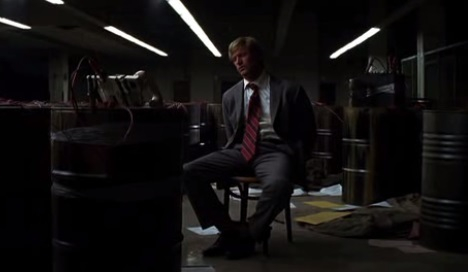
Christians are not the ones who never do bad things, they are the ones who realize that they don’t have the power to save themselves, and trust in Jesus’ righteousness alone. In the picture above, Harvey could have thought, “I’ve been going to the gym a lot, if I just pull hard I can break these bonds.” Or, “I’m really smart, I can for sure figure out a way to stop the bomb from detonating.” However, if it wasn’t for Batman, Harvey and Rachel would have shared the same fate. Like Harvey, we need a Savior to rescue us from fiery  destruction. We are unable to save ourselves.

The Side-kick

Robin

Trinity City Church’s shortened mission statement is “Joining God in the renewal of our city and world.” It is mind-blowing to me that the all-powerful sovereign God who created the whole universe uses sinful, easily distracted, often selfish people to bring about his plan of redemption. In terms of efficiency, it would make a lot more sense for God to do it all himself. Surely God can preach the gospel better, encourage people more holistically, heal and care for people more effectively. Yet, he chooses to use his people, his church, to accomplish his mission: “to reconcile everything to himself by making peace through the blood of his cross– whether things on earth or things in heaven” (Colossians 1:20).

Believers are called God’s co-laborers in his plan of restoration. God empowers his people with his Spirit to do his will. Jesus tells us that those who believe in him will do even greater works than he did (John 14:12), and that it is for our benefit that he leave the earth (John 16:7). These profound statements are true because of the work of the Holy Spirit. Ordinary people do amazing things for God’s kingdom. I’m sure each of you can think of somebody who has had a profound impact on your life. That was the result of God working in and through an ordinary and sinful person for your good.

Think about the dynamic between Batman and Robin. Robin has some natural skills, but is not likely to succeed on his own. Batman has greater wisdom, strength, and gadgets, without which Robin would probably get killed. He is a great helper and side-kick to Batman, but in a lot of ways Batman doesn’t need Robin (he didn’t in the Christopher Nolan movies). In the same way, God doesn’t need us, yet he demonstrates how great he is by doing amazing things through unlikely people. God showed his greatness when he changed the Apostle Paul from somebody who killed Christians into a Christian who would preach Christ even if it meant losing his own life. In his grace, God calls sinful people to make him known and bring restoration to hearts, communities, cities, and the world.

The Imposter

Batman-impersonator

The last stage is when we forget our place and start believing that we can do everything on our own. We start thinking we have everything figured out, and that we don’t need any help. That we don’t have any issues or sins that distort how we do things. We forget that Jesus tells us “You can do nothing without me” (John 15:5). We slowly drift from “Thy kingdom and Thy will be done” to “My kingdom come and my will be done”.

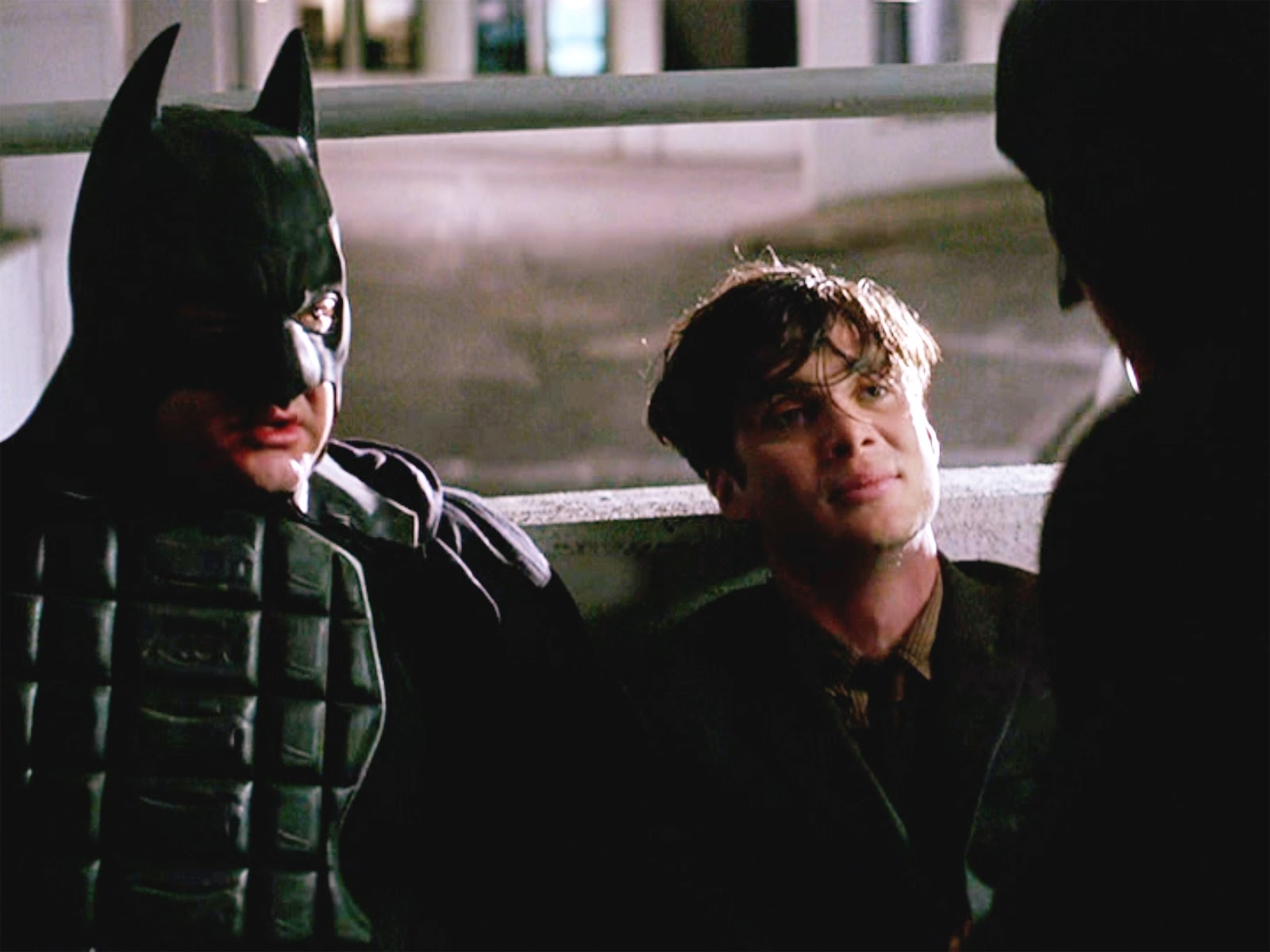
In the scene pictured about, the fake Batman asked, “What gives you the right? What’s the difference between you and me?” To which Batman epicly responds, “I’m not wearing hockey pads.” It was foolish and dangerous for those people to try to be Batman. Not only that, by using guns they were in opposition to Batman’s one rule of not killing people. In trying to be Batman they actually stood in opposition to Batman’s code of ethics. In the same way, it is foolish and dangerous to think of yourself as an all-star Christian who has it all together. When we start trying to be Jesus rather than trying to be more like Jesus, we end up in opposition to God and his plan. Andy Mineo captures this in his song “Superhuman“:

“Even though my pride’s telling me “don’t let the fans know”,
I am not a superhuman though,
I’m a man,
so the grace that I talk about on all my records,
I need it for myself, cause really I’m just a mess.”

Andy has probably impacted millions of people through his music, and with that he recognizes the potential for pride to creep in. God is gracious and calls us to be bold and use the gifts he has given to accomplish his plan. We are made in God’s image to bring forth goodness. At the same time, we are sinners in constant need to turn back to God, and in constant need to grow. My hope is to continue to take bold action for God’s kingdom and glory, while keeping in mind that I’m not as smart or holy as I want others to think. God is calling us to be both humble and courageous. No matter how long you have walked with Christ, you are still a sinner saved by grace, so you can’t boast in yourself. You are also “created in Christ Jesus for good works” (Eph 2:10). The call to live bold and humble seems like a contradiction, but starts to make more sense when we realize he are the Robin of our story, not the Batman.


How Hakuna Matata Ruined My Life

Hakuna Matata, these two words will solve all of your problems.”- Pumbaa “This is the great life, no rules, no responsibilities, and best of all, no worries.”-Timon.

At the age of 25, I have come to the realization that I have unwittingly become a disciple of Timon and Pumbaa. Their life motto “Hakuna Matata” (meaning “no worries”) is a philosophy that pursues personal pleasure, avoids responsibility, and denies the hurt that one experiences. The song is catchy and the sentiment seems nice, but when we examine it deeper we see how sad this lifestyle really is. I will give examples of how this philosophy falls short in The Lion King, the ways in which I have adopted an ‘hakuna matata’ lifestyle, and why I need a better philosophy for my life.

Timon told a grieving Simba, “When the world turns its back on you, you turn your back on the world.” Simba just experienced a traumatic event. He saw his father killed right before his eyes. He felt the sadness of losing his father. He felt guilty because he thought he was responsible for his father’s death. He felt ashamed to face his tribe. He was afraid because he was all alone in the desert. In the midst of all this pain and trauma, this lion cub is taught “just don’t worry!” “Forget about it.” In order to embrace hakuna matata, Simba lost himself. He was royalty. He had aspiration of being king. He had family, friends, and a kingdom who needed him. He gave all that up to be “happy” and comfortable. Simba needed to process his grief and move to a place of acceptance. Instead he buried the hurt.

And what about Pumbaa? He was lonely. He had no friends because of his stench. His heart longed for companionship (which is how God wired us). He experienced the agony of rejection. He felt ashamed and unloved. Granted, he found a good friend in Timon, but he also had to pretend that the rejection didn’t bother him. I want to be careful here because I know most people are overly concerned with being liked and what people think of them. I know it would behoove many to care less about what others think of you, and care more about what you and God think of you. Why do we sacrifice ourselves to please those who can’t affect our inherent worth? However, the pain of rejection is real. I think it is important to process that pain. In doing so you can understand why their approval can’t satisfy you, rather than pretending you aren’t hurting.

As I write these words I kinda feel like a hypocrite because I follow Timon and Pumbaa’s  teaching all the time. Over the past couple months I have  become increasingly aware that I am out of touch with my emotions. I am capable of empathizing with others and experiencing their feelings, but it is much more difficult for me to feel my own. My personality type is a 9 on the Enneagram, which means my core desire is for inner stability and peace of mind. Essentially, my default setting is to be unaffected by the negativity of the world around me (or inside of me). I rarely let myself feel sad. Not much makes me angry. I don’t get excited about much. I hardly ever miss people. I don’t know the last time I felt genuinely hopeful. When I start to feel painful emotions, I’ll lose myself in a Netflix series, a novel, food, social media, video games, sports, ministry, being successful, etc. Basically anything to numb the pain. Hakuna matata. According to Dr. Chip Dodd, “Whenever you don’t feel, you are blocked from living life to the fullest. Wherever you lack awareness of your heart, no room exists for God.”

The problem is that I try to construct a fake, comfortable world rather than being an active participant in the real world that God created. There is real pain in this world. Terrible injustices. Loss and loneliness. Depression. In an attempt to protect myself from the pain that inevitably comes in this broken world, I cut myself off from my own heart, genuine relationships with others, and, ultimately, with God. But I believe there is a better way.

When God the Father saw the brokenness of this world, thankfully he didn’t say ‘hakuna matata’. (What type of God would be indifferent to wickedness and injustice?) Rather, the bible teaches that Jesus left the comforts of heaven in order to live among hurting, burdened, and sinful people. He experienced loss of loved ones. He felt the pain of the sick, disabled, and rejected. He was misunderstood by his family. He experienced the cruelest form of injustice by being nailed to a cross when he committed no wrong. Jesus went through all of that so that sinful people might have a restored relationship with God through faith. His death and resurrection started the process of reconciling “everything to himself by making peace through the blood of the cross– whether things on earth or things in heaven” (Col 1:20).  Jesus cares deeply about the pains of the world, especially in his Church (1 Pet 5:7). He gave believers his Holy Spirit to empower us to love others truly, care deeply, and hope and rejoice when the world is falling apart around us.

We can either choose the path of love or the path of indifference. Engage the reality of the world, or hakuna matata. Which will you choose?

“To love at all is to be vulnerable. Love anything and your heart will be wrung and possibly broken. If you want to make sure of keeping it intact you must give it to no one, not even an animal. Wrap it carefully round with hobbies and little luxuries; avoid all entanglements. Lock it up safe in the casket or coffin of your selfishness. But in that casket, safe, dark, motionless, airless, it will change. It will not be broken; it will become unbreakable, impenetrable, irredeemable. To love is to be vulnerable.”- C.S. Lewis

To learn more about emotions, click here.

Pacman’s Purpose

Related image

Disclaimer- A lot of these thoughts came from the Black Mirror episode “Bandersnatch”.

In most video games the main character has a clear purpose. Mario rescues the princess. Donkey Kong Jr. rescues his father. Ryu is trying to win a world-wide martial arts tournament. But Pacman, if you look at it from his perspective, only has two objectives in life: eat as much as he can and try not to die.

He has no friends. He constantly runs around the same maze, never going anywhere new. He never faces new enemies (although the ghosts do get faster). The only difference he experiences is the food he eats. He is always eating, but is never full. Since he never gets bigger we can only assume that there is no nutritional value in the dots he eats. When he eats he gets points, when he gets enough points he gains an extra life, so that he can keep eating. Maybe he is just trying to have the best score out of anyone who came before him? He also can’t stop moving unless a wall stops him. If we think about Pacman as a character in a story, his existence is pretty sad. I wonder if we are the same as Pacman?

We are constantly consuming  food, Netflix, social media, smart phones, pornography, etc. We are always on the move, rarely taking the time to pause and reflect. We are trying any new health trend to live longer. We work really hard and try to move up the corporate ladder, usually to make enough money to buy bigger and better toys and have bigger and better experiences. We survive to consume and consume to survive.

“All man’s labor is for his stomach, yet the appetite is never satisfied” (Ecclesiastes 6:7). I wonder if Pacman would cry out with the Teacher of Ecclesiastes, “Absolute futility, everything is futile. What does a man gain for all his effort he labors at under the sun? I eat all of these dots, and the board is full at the next level. I increase my achievements and get the new high score, but the ghosts get me in the end whether I’m at level 2 or 20.”

Death is inevitable, whether we get 8 years or 88. There has to be more to life than consuming and surviving. If we don’t know our purpose, we are destined to be the same as Pacman, driven exclusively by our lusts and our fears. Do you have a purpose that is greater than yourself, one that will leave a legacy after you’re gone?

Climbing after Christ

In November I was in Colorado Springs, and a friend suggested that I hike “The Incline”, which is a flight of stairs that goes all the way up a mountain. When hiking you gain 2000 ft. of altitude in a mile, so really steep. As I made my way up the mountain, lungs and legs burning, it occurred to me that climbing a mountain is a lot like following Jesus.

IMG_20171128_124805819 (1)

Before you climb a mountain you first look around at the flatness around you, and realize that the view from the top has to be a lot better. Similarly, when one becomes a Christian they first look around at their lives and see their brokenness, their addictions, and their shortcomings and say, “I want to look more like Jesus.” You look up and see Jesus at the top of the mountain and begin your journey.

The first part of the hike is always the easiest. You are excited, it’s usually not too steep, and you are full of energy. But there comes a point in every hike when the terrain gets tougher, your legs and lungs burn. You look up and realize there is so much left. You think, “There is no way I can keep going.” “Maybe I should just turn around.” “Is it even worth it to keep going?” Have you ever been there in your faith? I have. I get caught in old patterns of sin, or seasons of loneliness, and I wonder “Is following Jesus worth it?” “Maybe I should just give up this Christian thing and go back to my old life.” So, what do you do?

  1. Don’t compare yourself to those who are further along than you. As a new believer you shouldn’t expect yourself to be at the same level as someone who has been a Christian for 20 years. The process of becoming more like Jesus literally takes a lifetime, don’t get discouraged.
  2. Look back at how far you have come. When it feels like you aren’t making progress, look back at the victories and growth you’ve had. Also, here is a good time to have people who encourage you in your faith and celebrate what God has done in you. John Newton once said, “I am not what I ought to be, I am not what I want to be, I am not what I hope to be in another world; but still I am not what I once used to be, and by the grace of God I am what I am.”
  3. Take heart that Jesus won’t let you fall all the way back to your starting point when you sin. Back in the day, when I sinned I would beat myself up and think that I was back to square one, and all the growth I had was lost. But that’s a lie. In reality, it was more like falling back 5 steps rather than 200.
  4. Take it one step at a time. I know that is cliché, but it’s true. Especially in the tough times, sometimes it takes all your energy to put one foot in front of the other. It doesn’t benefit you to look a mile up the road and trip over a stone right in front of you. “Don’t worry about tomorrow, because tomorrow will worry about itself. Each day has enough trouble of its own” (Matt 6:34).
  5. Don’t try to climb alone. “Two are better than one . . . For if either falls, his companion can lift him up; but pity the one who falls without another to lift him up.” (Ecclesiastes 4:9-10). So, seek Christian community. Also, after Jesus sent out his disciples, he said, “Remember, I am with you always, to the end of the age” (Matt. 28:20). And again, “I will never leave you, or forsake you” (Heb. 13:6). Jesus is always with you. Even when you feel alone, you’re never really alone.
  6. Beware the false peaks. You might come to a place in your faith journey where you think you have made it. You are fully mature, and there is nothing else you need to grow in. You’re not there yet. Remember, the goal is to look like Jesus. He is perfect and it is impossible for us to reach perfection on this side of eternity. So, you ask, is the Christian life just like Sisyphus? Constantly pushing the boulder up a mountain only for it to roll to the bottom when we near the top? Always striving towards a goal, and never getting there? No. And here is the difference: in the Christian walk we don’t start over. We keep going and experience new heights, deeper intimacy, and greater maturity. As C.S. Lewis says in the Last Battle, “Come further up, come further in!” Also, unlike Sisyphus, we can rest in Christ. “Come to me all who are weary and burdened and I will give you rest” (Matt. 11:28).
  7. There are no shortcuts, no helicopter rides, and no escalators when following Christ. There is no easy way to holiness, rather we are all called to pick up our cross daily and follow him. Sometimes the path is easy with a gentle incline. Other times it feels like you are free-climbing a vertical wall just trying to keep your grip. The vertical wall is much more difficult and dangerous, but it will also bring you to the top more quickly. In the same way, God uses hardships, trials, and seasons of suffering to expedite the process of making you more like Jesus.

I conclude with some encouragement. “I am sure of this, the He who started a good work in you will carry it on to completion until the day of Jesus Christ” (Philippians 1:6). No matter where you are in your walk with Christ—if you are just starting, if you feel like you are slipping backward, if you feel like you are at a point where you can’t keep going, if you are making steady and gradual progress— God will not leave you were you are. He loves you too much, and one day He will bring you to the top of the mountain where you will be perfectly one with Jesus. When we get to the top, we will realize that all of the pain and struggle was worth it.

wpid-img_20150630_131108058.jpg


Ghosts of My Mind

Although I am free and forgiven from all of my sins, I’m still haunted by ghosts of past failures. Memories of my mistakes come to my mind with images so real I swear that they’re standing right in front of me. Is it because of shame or regret? A desire for what once was? I mean, even though it brought about pain and destruction, there were good moments. Legends tell us that ghosts are souls that are unable to move on to the afterlife because they have unfinished business. Do these memories haunt me because there is still reconciliation to be done?

Or maybe it is just like all other wounds. You have to address it. Clean and care for it, but then you have to leave it to time. If you pick at it you’ll bleed. Are my wounds infected and need further cleaning? Or do I just need to let myself heal? I just hope the wound didn’t hit a nerve. Permanent damage that affects me for the rest of my life. Even so, Jesus can make the blind see, the deaf hear, and the crippled walk.

Identity Crisis

“When work is your identity, success goes to your head, and failure goes to your heart.” Pastor Tim Keller.

I think the world tries to define people’s value in one of three ways:

  1. Performance- You are what you do. (Isn’t this what Batman teaches us?)
  2. Possessions- You are what you have.
  3. Reputation- You are what others think of you.

Image result for it's not who i am underneath

Maybe you think you are somebody because you are successful in work, school or sports. Maybe you find value in having nice clothes, a nice house, and all the coolest toys. Maybe you find identity in being liked by people. Having lots of friends, being desired by the opposite sex, etc. But what happens when you come up short in these areas? What happens when you don’t do well on an assignment, or make a costly mistake at work or in a game? Will you cheat on the next assignment or shift the blame to a coworker/teammate? What do you do when a crappy car is all you can afford? Will you rack up credit card debt to impress people with new stuff? What happens when you ask someone on a date and they turn you down? Will you run to pornography to avoid the possibility of rejection?

These three options I’ve described are false identities. They are identities built on a weak foundation, and can be lost at the drop of a hat. If you put all of your hope in performance, possessions, or reputation you will be disappointed often. Paralyzed by fears of failure, fear of rejection, or constantly questioning if you are actually good enough. Every one of us is either living a false identity, or struggling with a false identity. And it is dangerous and enslaving.

I want to suggest that there is a distinction that must be made between identity and expression, and problems arise when they are confused. Let me illustrate: my dreads do not define me, rather they are an expression of who I am. I have tattoos. They serve as a daily reminder of what God has done in my life and an easy way to share my story with people. But tattoos don’t define me. If people don’t like them (my parents), I am not bothered because I don’t see it as an attack on me, they just prefer different things. I love playing sports, but my worth has nothing to do with my success on the field. I don’t do sports to “find myself”, rather I play because I love it, and on the field I have the freedom to express myself in ways that I can’t in other areas of life.

However, I’m not even close to having things figured out. I really struggle with intellect as my false identity. Sometimes I think I can find worth by wowing people with clever analogies or having a deep understanding of the Bible. Even as a write this I agonize over saying the right thing to impress whoever might read it. And in school with essays and writing a dissertation I’m constantly faced with the reality that there is so much that I don’t know, and there are so many people who are way smarter than me. And sometimes it’s hard for me to deal with because I feel like I pour myself into these blogs and the essays I write, and it hurts when people aren’t feeling it. Sometimes reading a professor’s comments on a paper feels like a personal attack. Rather than receiving criticism and improving, I ignore them. I believe the lie that my value is in how well I can communicate clever ideas.

Don’t get me wrong, God has given me gifts and talents, and I want to pursue excellence and use them to the best of my abilities. But the way in which I use these gifts should be a way to love God and love people. It should be an expression of what God has done in my life, not a way for me to find approval. I already have it. I mean God knows all of my sin, all of my weakness, all of my insecurities, all of my shortcomings, and in spite of all that he gave Jesus to die for my sin. He gave me a new heart and a new identity, one that I don’t deserve, and one that can never be taken away. I want to continue to write and study and grind, but I want it to do it glorify God and build people up. I want to be honest about what I’m going through and share what I think God is teaching me, hoping that people see and believe that there is life and freedom in Jesus. So I end with a challenge. Search your heart. Ask yourself, “Who am I really? Where is my identity really found?”     

Hoosiers and Discipleship

Hoosiers, along with being one of the greatest sports movies of all time, also presents a nice picture of discipleship. When I say discipleship I am referring to the process in which we learn to better follow Christ and grow in maturity under the guidance of a mentor with more life experience. The “discipler”/”disciple” relationship could be for a specific life stage. For example, you are about to get married and seek guidance from a couple who has been married for a while. If you are interested in serving in a specific ministry, you would want to learn from somebody who has done it. Or the relationship can be more general. You see somebody you respect and think, “I want to learn everything I can about following Jesus from this person.”   Four stages of discipleship that  I address are: (1) Mission, (2) Calling/Invitation, (3) Cultivation/Training, (4) Commission/Empower.

Mission- Before you do anything, it is important to know what it is you want to accomplish. For example, Jesus’ mission was to bring the Kingdom of Heaven to earth and make his Father known. He did this through his teachings, miracles, and ultimately his death on the cross. In Hoosiers, Coach Norman Dale had a vision of teaching a small-town basketball team that “There is more to the game then shooting. There are fundamentals and defense!” He saw the team had potential to do great things, but they were stuck in a routine of mediocrity. Notice, however, that neither Jesus nor Coach Dale attempt to accomplish their mission alone. Which brings us to the second stage.

Calling- Jesus gave no fancy speech when he chose his first disciples. All he said was, “Follow me,” and they did! Later in the Gospels Jesus gives conditions for following him: you have to love him more than your family. You have to deny yourself, pick up your cross, and follow him. He told one man to sell everything he owned before following him. In Hoosiers, Coach Dale asked the town drunk, Shooter, to be his assistant coach. This is similar to Jesus in a couple ways. First, Coach Dale saw something in Shooter that no one else did. Shooter’s own son told Coach, “He don’t deserve a chance.” Jesus was often criticized for being a “friend to tax collectors and sinners”. Also, the 12 disciples were regular guys, fisherman with no serious religious education. He chose people you might not expect. Coach Dale also had conditions for Shooter. Shooter had to clean up, shave, wear a suit to games, and be sober. If he didn’t do these the relationship couldn’t happen. Similar to the disciples (and everyone who comes after them) Coach didn’t force Shooter to do anything. He presented an opportunity to be better and do something greater with his life, and he was willing to stop drinking to do it. So, let’s say you have a vision of a people group you want to impact, you invite a younger person to come along side you, what would be some conditions? One might be to make the relationship a priority, even if it means meeting at 6:30 a.m. Another one is complete transparency. No secrets, and no area of your life is off-limits (Hence you really need to trust each other).

Cultivation- After you have initiated and defined the relationship, the next stage is to develop the younger person. In this stage the mentor teaches and guides the mentee. Although Jesus explained parables to the 12, they probably learned more from everyday interaction with Jesus, watching what he did, and helping him with various tasks. There are also moments when the 12 screw up and Jesus  corrects and encourages them. In Hoosiers, we don’t see as much of this process between Coach Dale and Shooter. There are a few shots of them talking on the bench, and one tenser scene in which Coach Dale is dunking Shooter’s head in water forcefully reminding him that he agreed to be sober. Shooter tells him, “I don’t think I can cut it.” And Coach responds,”You can cut it. I didn’t think I could cut it the other night either, but after what Jimmy did, it’s gonna take the Indiana National Guard to get me out.” He started with rebuke and ended with encouragement. So if you are in a discipleship relationship with someone it is important to meet and do formal lessons, but it is equally important to invite them over to see how you interact with your spouse and observe how you do life. Another teaching tool would be to invite them into your ministry field and let them watch and then ask questions. If you lead a bible study, let the disciple come, then answer questions when it finishes. 

Commission- There comes a time in a mentor/mentee relationship when the mentor has done all the training they needed, and then steps aside and gives responsibility to the mentee. This moment comes in Hoosiers when Coach Dale intentionally gets thrown out of the game, so that Shooter has to lead the team in the final minutes of a big game. Shooter was terrified and lacked confidence, but he eventually led them to a victory. Shooter didn’t believe in himself, but Coach Dale saw and believed in what him. (https://www.youtube.com/watch?v=C2ILSuQOmEg)  Sometimes we need somebody to push us out of our comfort zone. Someone who pushes us to do/be more than we ever imagined. After rising from the dead and before ascending into heaven Jesus told his disciples, “All authority in heaven and on earth has been given to me. Go therefore and make disciples of all nations, baptizing them in the name of the Father and of the Son and of the Holy Spirit, and teaching them to obey everything that I have commanded you. And remember, I am with you always, to the end of the age” (Matt. 28:18-20). Keep in mind Jesus is telling this to the guys who deserted him and left him to die alone. One of these guys denied him three times. Do you think they were brimming with confidence? Probably not, but they could take comfort in that Jesus would always be with them. Although Jesus was no longer present in body, his ministry continued through those 11 ordinary men. The fact that I’m writing is evidence that this mission is still going on today, nearly 2000 years later! Investing in the lives of younger people intentionally and faithfully has changed the world, and still has the power to change the world today.   Read More