Paul uses the word “appear” twice in Titus 2:11-14. “The grace of God has appeared” is written in the past tense. God’s grace has already manifested itself in the world. At the same time, “we wait . . . for the appearing of the glory of God.” The appearing of his glory will come in the future. The past appearance of grace and the future appearance of glory are two realities that anchor a Christian through the trials, temptations, and uncertainties of this world. This hope is a firm and secure anchor for our souls when the wind and the waves and currents of this life seek to move us off our charted course. God’s grace has appeared. God’s glory will appear. How should we live in between? Let’s consider the passage:
11 “For the grace of God has appeared, bringing salvation for all people, 12 instructing us to deny godlessness and worldly lusts and to live in a sensible, righteous, and godly way in the present age, 13 while we wait for the blessed hope, the appearing of the glory of our great God and Savior Jesus Christ. 14 He gave himself for us to redeem us from all lawlessness, and to cleanse for himself a people for his own possession, eager to do good works.”
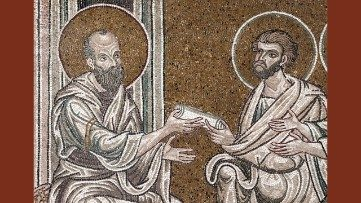
Paul’s letter to Titus
Two questions that come to mind from verses 11-12 are: What does it mean that the grace of God has appeared? and what does this grace do?
God’s Grace Has Appeared
I think the best explanation is that Jesus himself is the “grace of God.” John tells us that out of the fullness of Christ, we have received grace upon grace, and that Jesus came to earth full of grace and truth (John 1: 16-18). Jesus is the perfect embodiment of God’s undeserved kindness towards sinners.
Jesus lived a perfect life. He taught. He healed. He cast out demons. He inaugurated his heavenly kingdom. He died on the cross for our sins. Jesus “gave himself for us to redeem us from all lawlessness, and to cleanse” us from our sin (v.14). After dying he rose from the dead in power. He has also given us his Holy Spirit, an unimaginably good gift, so we will never be without God’s presence and power in our lives.
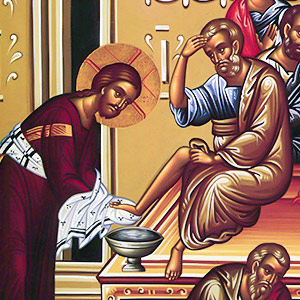
Jesus washing his disciples’ feet.
This passage lists two things that grace does: brings salvation and instructs.
God’s Grace Brings Salvation
Being saved by grace is synonymous with being saved by Jesus. “This saying is trustworthy and deserving of full acceptance: ‘Christ Jesus came into the world to save sinners'” (1 Timothy 1:15). Ephesians 2:8 states, “For it is by grace you have been saved, through faith.” Nobody can live a good enough life or do enough good deeds to earn their place in heaven.
We are loved and accepted by the Father by grace alone. Not because of our morality. Not because of our knowledge. Not because of our eloquent prayers. Not based on how we voted in the last election. Salvation is a gift to be received, not a prize to earn. Why is this so important?
If you don’t believe that you are accepted by grace alone, you will fluctuate between pride and fear. When you are behaving well (however you define it) you will feel good about yourself and superior to others. When you fall into sin, you might doubt that God really loves you. The phrase, “You call yourself a Christian, but . . .” grows louder in your mind. Believing that we are saved by grace keeps us humble and secure because salvation is wholly dependent on God, not ourselves.
Believing you are accepted by grace alone also transforms how you face trials and suffering. To be saved by grace we must first own our badness. All of it. God sees the very worst of us and accepts us because Christ died for our sins. If that is true, no hardship we face can be punishment for the wrong we’ve done (a just judge can’t punish the same crime twice). We usually don’t know why God allows us to suffer, but if it is true that we are saved by grace, we know that suffering is not because he is indifferent towards us or displeased with us.
God’s Grace Teaches Us How to Live
God’s grace first instructs us to “deny godlessness and worldly lusts.” Jesus tells us that one function of the Holy Spirit is to convict the world of sin (John 16:8). The Spirit reveals the ways in which we are falling short. Start with your own conscience. What are things that you do that you feel bad about? Things that you know are holding you back? Things that nobody else needs to tell you are wrong? Deal with these first.
You can then considering the works of the flesh listed in Galatians 5:19-21, “Sexual immorality, moral impurity, promiscuity, idolatry, sorcery, hatreds, strife, jealousy, outbursts of anger, selfish ambition, dissensions, factions, envy, drunkenness, carousing, and anything similar.” Which of these are present in your life?
A shorter list is the “Seven Deadly Sins”:
Pride
Greed
Lust
Envy
Gluttony
Wrath
Sloth
A sick person cannot get better without an accurate diagnosis. Similarly, we cannot grow into the people God is calling us to be without addressing our sin. The sin inside us will poison everything we do if left unchecked.
Whenever we turn from sin, we must turn towards God. This is the definition of repentance. God’s grace teaches us to deny godlessness, then teaches us to live in a “sensible, righteous, and godly way in the present age.”
Sensible- We are to be of sound mind, sober, and self-controlled. This is the opposite of being enslaved to worldly lusts. Luke 15:17 describes the prodigal son “coming to his senses.” He realized he was a fool and going home was the sensible thing to do.
Righteous- Christians are to do what is right and just. We are to do the proper thing at the proper time. We are to use honest and fair measures and apply them equally to all people, including ourselves (Matthew 7:1-2). We are not to show favoritism or treat people as less than.
Godly- This word, eusebos, come from “eu” meaning “good” and “sebo” meaning worship or reverence. Christians are to have appropriate reverence for Christ and to reflect that in all that we say and do. This is directly opposite of the godlessness listed above (asebeian).
God’s grace appeared (past tense) bringing salvation to all people (v.11). It instructs us how to live in the present age (v.12). It also gives the Christian hope for the future (v.13).
The Glory of God Will Appear
The Christian life is one of waiting and groaning. The world is not how it should be. The pain, frustrations, and tragedies at times feel like an unbearable weight. But there is more to the story. Christians have a “blessed hope” that God’s glory will appear and transform everything.
Jesus said that after a time of great suffering, “Then will appear the sign of the Son of Man in heaven. And then all the peoples of the earth will mourn when they see the Son of Man coming on the clouds of heaven, with power and great glory. And he will send his angels with a loud trumpet call, and they will gather his elect from the four winds, from one end of the heavens to the other” (Matthew 24:30-31). Jesus will return with power and glory and gather his people to himself.
“He will come again in glory to judge the living and the dead, and his kingdom will have no end.”
Paul writes in 1 Corinthians 15:42-44, “So will it be with the resurrection of the dead. The body that is sown is perishable, it is raised imperishable; it is sown in dishonor, it is raised in glory; it is sown in weakness, it is raised in power; it is sown a natural body, it is raised a spiritual body.” In Christ, death becomes a doorway to an unimaginably spectacular life with God.
The good news of the bible is that God will restore all things. The culmination of the Christian story is the new heavens and new earth. It promises more than a disembodied eternity, but a physical world as it was always meant to be. A world where “all that was sad becomes untrue.”
Christ will return to rid the world of all evil, pain, and sickness. He will fully bring his heavenly kingdom to earth and he will be with his people. If this is true, how should those who have received his grace and hope in his coming glory live?
How Shall We Live?
In Titus 2:14, Paul first reminds Titus of what Christ did for us. “He gave himself for us to redeem us from all lawlessness . . .” Christ’s death bought us back from the land of sin and death, and adopted us as sons and daughters of God (Romans 8:15). His blood has cleansed us from our sin (justified), and his Holy Spirit is continually cleansing us from our sin (sanctifies). We belong wholly to Christ.
Paul tells us that this makes us people who are “eager to do good works.” Paul is inescapably clear that we are saved by grace, not by our good works. Yet, good works is the reason God created us. We were “created in Christ Jesus to do good works, which God prepared in advance for us to do” (Ephesians 2:10).
God made Adam to work and watch over the Garden of Eden (Genesis 2:15), to actualize the potential of his creation. God made trees, but humans make tables and chairs. God created seeds, but humans plant, water, and cultivate them so that they can grow. God created sound waves, but humans rearrange them to compose music.
In the Sermon on the Mount, Jesus said, “Let your light shine before others, that they may see your good deeds and glorify your Father in heaven (Matthew 5:16). Work is how we live out the two greatest commands of loving God and loving our neighbor. God provides our daily bread through farmers. He brings healing through doctors. He instructs and disciplines through parents and teachers. He encourages through the words of loved ones.
Because we are saved by grace, our work no longer defines our worth. We have God’s approval by grace, so we no longer strive for the approval of others. We have hope in the new heavens and new earth which means that none of our work is wasted. Because of the fall, work is frustrating and more difficult than it should be (Genesis 3:17-19). Because of the resurrection, “our labor in the Lord is not in vain” (1 Corinthians 15:58). This frees us to do our work wholeheartedly. We aren’t Sisyphus endlessly pushing a boulder up a mountain, nor are we people who need work to justify our existence. We are free to do our work for the glory of God alone. As these truths become more real to our lived experience, we will live more freely and effectively and better embody Christ in the world.
Let Us Pray
Father, help us to grasp the richness of your grace. Help us to rest in the hope of your resurrection. Make us a people who are eager to do good works. Give us eyes to see how you use our ordinary efforts to bring about extraordinary results. May the good work we do today echo in eternity. Amen.
I was viewing your page on Titus 2:11-14 and there is a part where in verse 12 the “UN” is left off of the text.
Kjv Titus 2:12 Teaching us that, denying ungodliness and worldly lusts, we should live soberly, righteously, and godly, in this present world;

 Cultural Eulogy
I was viewing your page on Titus 2:11-14 and there is a part where in verse 12 the “UN” is left off of the text.
Kjv Titus 2:12 Teaching us that, denying ungodliness and worldly lusts, we should live soberly, righteously, and godly, in this present world;
LikeLike
Thank you for reading and commenting. I used a different translation that uses “godLESSness” instead of “UNgodliness.”
It would be a big miss if I wrote that we are to “deny godliness.”
LikeLike