I recently saw Wicked in theaters and was impressed. The songs were great, the world was bright and colorful, and the cast had great chemistry. However, I struggle with movies that reimagine a classic villain as misunderstood rather than genuinely evil (Cruella and Maleficent gave me a similar feeling). I will not give a full movie review here. My focus will be on what this film says about the nature of God and morality.
Disclaimer: There are some spoilers in this review. I’d also encourage you to read Brett McCracken’s fuller review here. Brett is who I wish I could be as a writer 🙂
How Wicked Views God
In Wicked the Wizard of Oz is essentially their God. We hear phrases like “Oz bless you,” “Thank Oz!” or “What in the name of Oz!” Everyone puts their hope in the Wizard. They believe that he will deliver them from all their problems. However, Elphaba learns that the Wizard is a fraud. He has no power of his own, but uses smoke and mirrors to deceive the masses.
In the 1939 Wizard of Oz, the Wizard was portrayed as a snake-oil salesman type. He had no power but was generally well-intentioned. In Wicked, the Wizard is analogous to Hitler. He believed that people would only unite around a common enemy, so he used propaganda to turn humans against innocent talking animals.
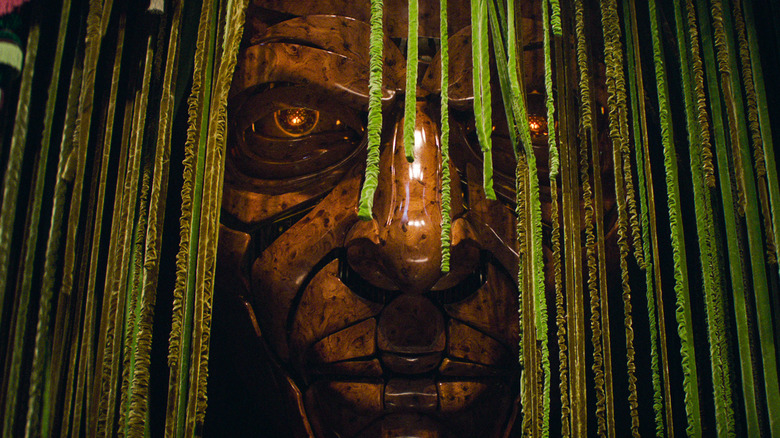
The theology of Wicked is that God is a fraud. He has no power to save anyone, but uses rituals and deception to prop up the privileged class. He is only concerned with staying in power and maintaining order, even if it means hurting the innocent. A common critique against Christianity is that the Church is a man-made institution that only exists to prop up current power structures. Karl Marx called religion the “opiate of the masses.” Those skeptical of religion don’t see love, joy, peace, and beauty. They see shame, division, and various forms of exploitation.
The audience is left wondering, if the Wizard can’t save us, who can? The answer seems to be Elphaba.
What Makes the Witch Wicked?
Elphaba was dealt a bad hand in life. Her birth was the result of her mother’s adultery, giving her green skin. Her father hated her and children bullied her for how she looked. Despite this, she shows no moral flaws. She carries much guilt for her paraplegic sister and constantly advocates on her behalf. Her two flaws are that she struggles to control her powers and is socially awkward (which is explained by being an outcast all her life). At this end of the movie, Elphaba is clearly the hero. The Wizard is the real villain, along with the ambivalent majority who refuse to care about the oppression of animals.
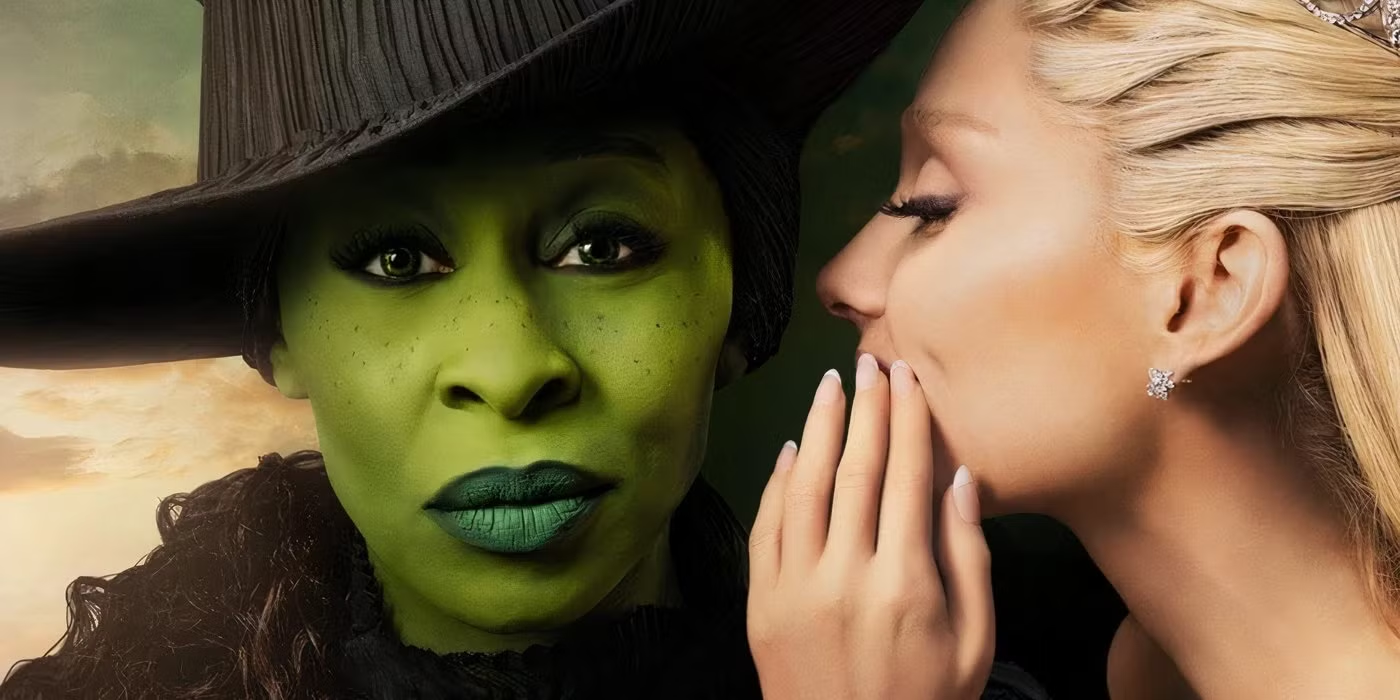
At the end of Part 1 my main questions are, how/will Elphaba go bad? Will her compassion for the downtrodden slowly turn her bitter and resentful to the rest of the world? Or will she stay the same, showing everyone else to be the real villians? Also, how does her sister become the Wicked Witch of the East? In Wicked she is wheelchair-bound, shows no magical abilities, and has a crush on a boy from Munchkin Land. What will happen to make the munchkins throw a parade when a house falls on her? I’m eager to see how Part 2 will answer these questions!
What Happens when God is Dead?
Elphaba rightly advocates for the dignity of all people (including animals in that world). It is wrong to treat somebody as less than because of their skin color or physical abilities. Most people in the West would agree. One might call these truths self-evident. But why is it true?
The bible says it is because there is a God who made us in his own image. Genesis 1:27 is the basis for all human rights. “So God created man in his own image, in the image of God he created him; male and female he created them.” This is why oppression, racism, and sexism is wrong. Without God, these things are relatively immoral, not absolutely immoral (meaning in a different time and place, what we think of as bad might actually be good). If there is no God, all morality ultimately comes down to the preferences of the times. So, if the Axis had won WWII we could be celebrating Hitler as a revolutionary hero, rather than the personification of evil. Wicked shows that God is a fraud, while simultaneously calling people to high moral standards. But these standards are not rooted in anything but intuition.
In the song “Defying Gravity” Elphaba sings, “I’m through with playing by the rules of someone else’s game . . . I’m through accepting limits ’cause someone says they’re so. Some things I cannot change, but ’til I try, I’ll never know . . . And nobody in all of Oz, no wizard that there is or was is ever gonna bring me down.”
This song is a call to push past limits and to self-actualization. The message is essentially, “You are your own authority. You are free to be anything you want to be. Even the law of gravity can’t hold you back.” But everyone has limitations. We are limited by our knowledge, time, and strength. We all need to eat and sleep. It is wise to distinguish between limitations we need to accept for our own good, and arbitrary limitations we need to push beyond. G.K. Chesterton once said, “The more I considered Christianity, the more I found that while it had established a rule and order, the chief aim of of that order was to give room for good things to run wild.” God gives rules and limits no to kill our joy, but to maximize it.
If God is a fraud, like Wicked suggests, then it would make sense to play by our own rules and follow our own moral intuition. But if God is real and he is good, wise, and powerful, if he loved the world so much that he gave his own and only son to die on the cross for our sins, then we are obligated to live our lives according to that reality. Is it possible the the God who created the universe can run it better than us?
 Cultural Eulogy
I really appreciate this line of thinking.
This is why oppression, racism, and sexism is wrong. Without God, these things are relatively immoral, not absolutely immoral (meaning in a different time and place, what we think of as bad might actually be good). If there is no God, all morality ultimately comes down to the preferences of the times.
I also am not sure I have heard or read this below. Wow, that is good.
G.K. Chesterton once said, “The more I considered Christianity, the more I found that while it had established a rule and order, the chief aim of of that order was to give room for good things to run wild.” God gives rules and limits no to kill our joy, but to maximize it.
Thank you, Jole, for getting my juices flowing this morning.
Love,
kT
And nice work leading, last minute, yesterday. Not an easy situation to be in.
LikeLike